How close is Africa from Europe? You can see Europe from Africa with naked eyes on a clear day. That is less than 9 miles, at the Strait of Gibraltar between Tangier, Morocco and Tarifa, Spain across the Mediterranean Sea. There are regular services between the two continents that one can take a day trip to the other continent by ferries across the strait.
The Trip
Africa was a continent that had always intrigued me. In early 2021, a friend of ours visited Morocco and highly recommended the tour. We decided to go to Morocco as our first adventure into the Africa continent.
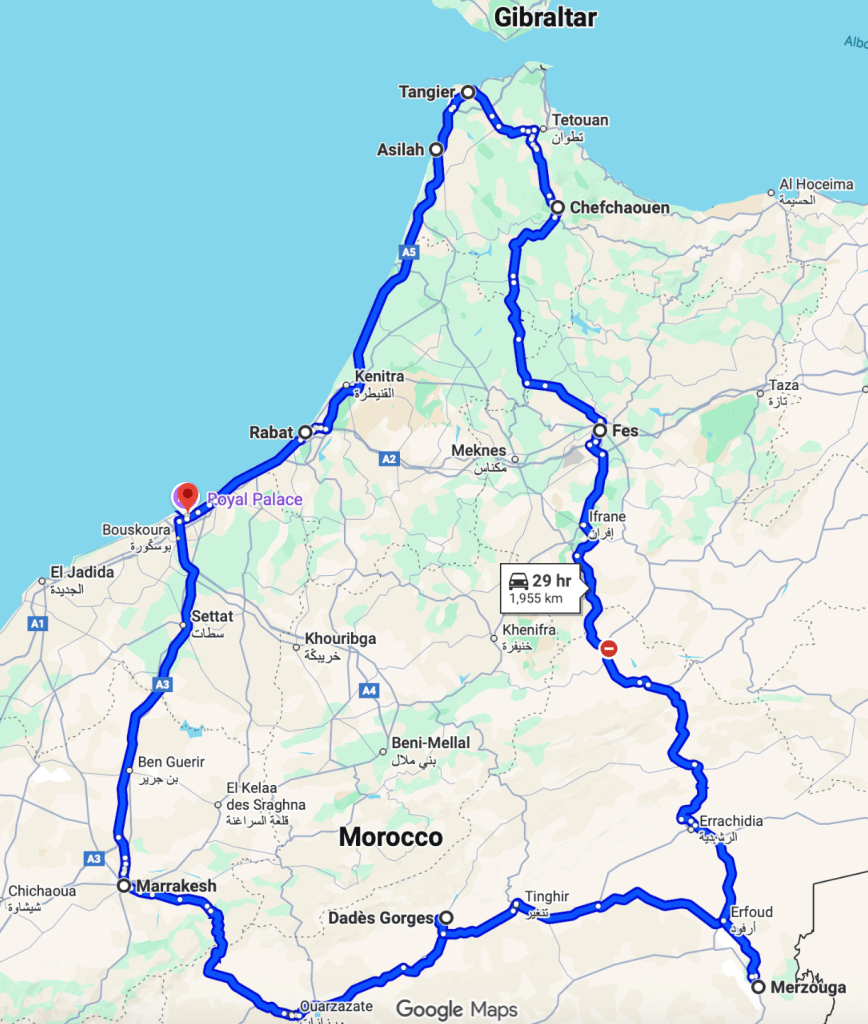
The friend shared a Morocco travel log written by one of his group members as well as the tour company’s contact information. Using those were able to skip a lot of research of our own. The tour operator made the arrangement for us: a 4×4 SUV with a driver and a tour guide who speaks Arabic, Berber, French, English and several other languages. This was a personalized tour to our specifications. We chose the places that we wanted to visit and the type of hotels that we’d like to stay. The package included transportation, guides (a traveling guide and 2 local guides, one in Merrakech and one in Fez), a driver, lodging (11-night, 7-place), a camel tour, and some meals. Our guide and driver would pick us up at the airport and we’d be traveling on a 4X4 with the driver and the guide for the rest of the tours. It felt like we were going on a mini expedition.
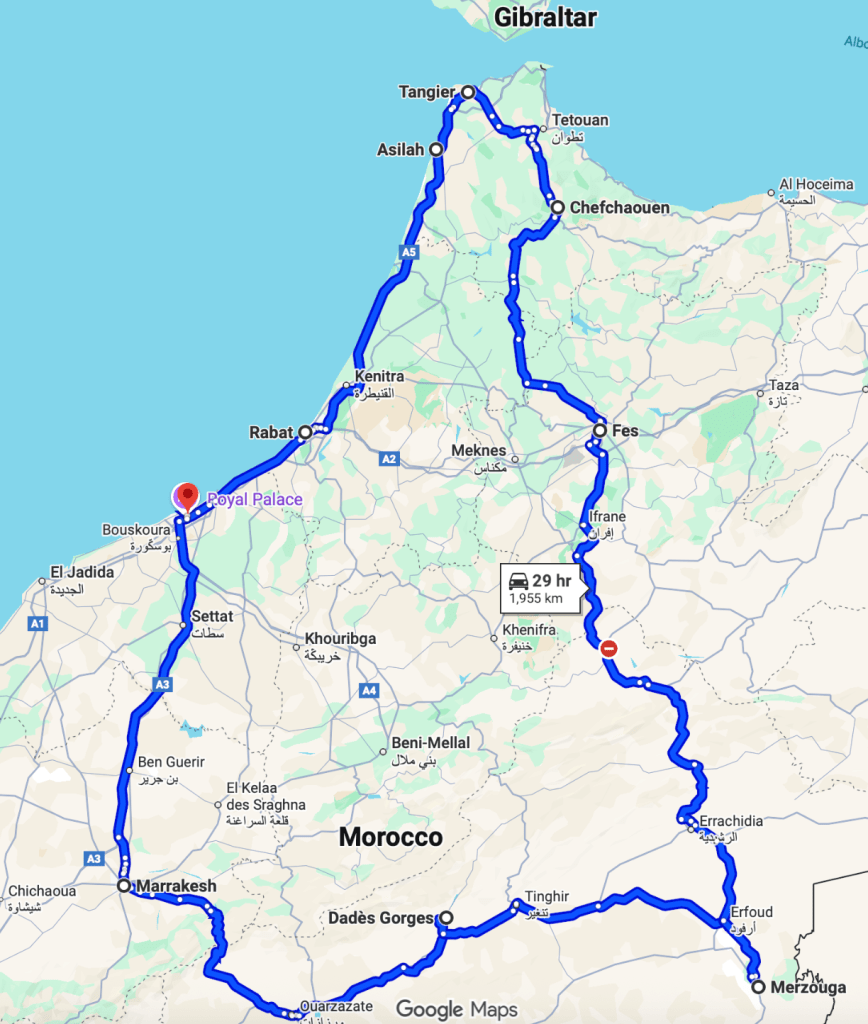
We flew to Morocco in early June 2021, just before it got too hot in the desert, arriving in and departing from the Casablanca International Airport. Our night stays were household destinations: Marrakesh, Dades Gorge, Sahara Desert, Fes, Chefchaouen, Asilah, and Rabat. We also made day trips to Casablanca, Ait ben Haddou castle, Todga Gorge, Meknes, Volupolis, Tangier, and Cape Spartel.
People, History, Culture, and Language
A majority of Moroccans are originally Berbers and some are Arabs. Berbers are native people who live in North Africa and speak Berber language. Morocco became two provinces of the Roman Empire after 40 AD. Some 600 years later, Arabs migrated to Morocco with the Muslim Conquest of North Africa in the 7th century. Since then, North Africa has been part of the Muslim world. The most widely spoken language in Morocco is Arabic and Berber. Most of the road signs on highways are in 3 languages, Arabic, French, and Berber. People in the cities speak multiple languages, usually Arabic, French, and Berber, especially if they conduct business. The country was a protectorate of France and Spain starting from 1912, with France controlling most of the country. Morocco regained its independence in 1956. There are still 2 Spanish enclaves in the county, each the size of a city, on the Mediterranean coast east of Tangier.
Food and Accommodation
Moroccan-influenced food is quite popular in the U.S., especially couscous. You can eat couscous everyday in the U.S in many restaurants. But in Morocco most restaurants serve couscous only on Fridays because it takes time to make it and they use couscous to celebrate a week’s hard work. Tagine is like a national dish in Morocco. It’s a vegetable or mixed vegetable and meat dish slow cooked in a clay pot. The dish is delicious and the cone shaped, exquisitely painted tagine pot is a eye candy.
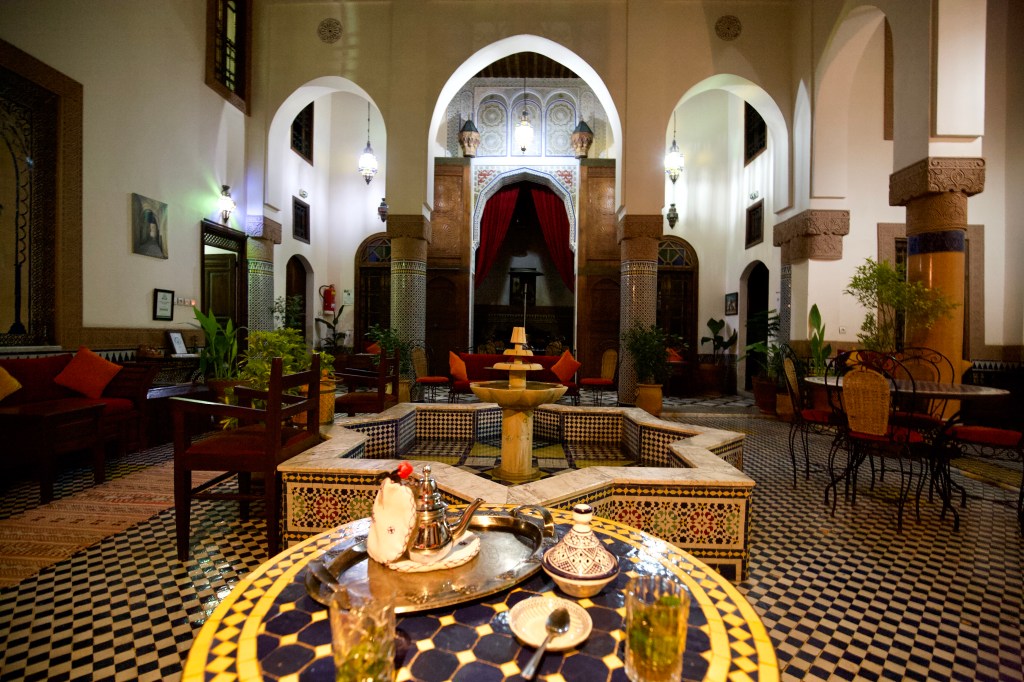
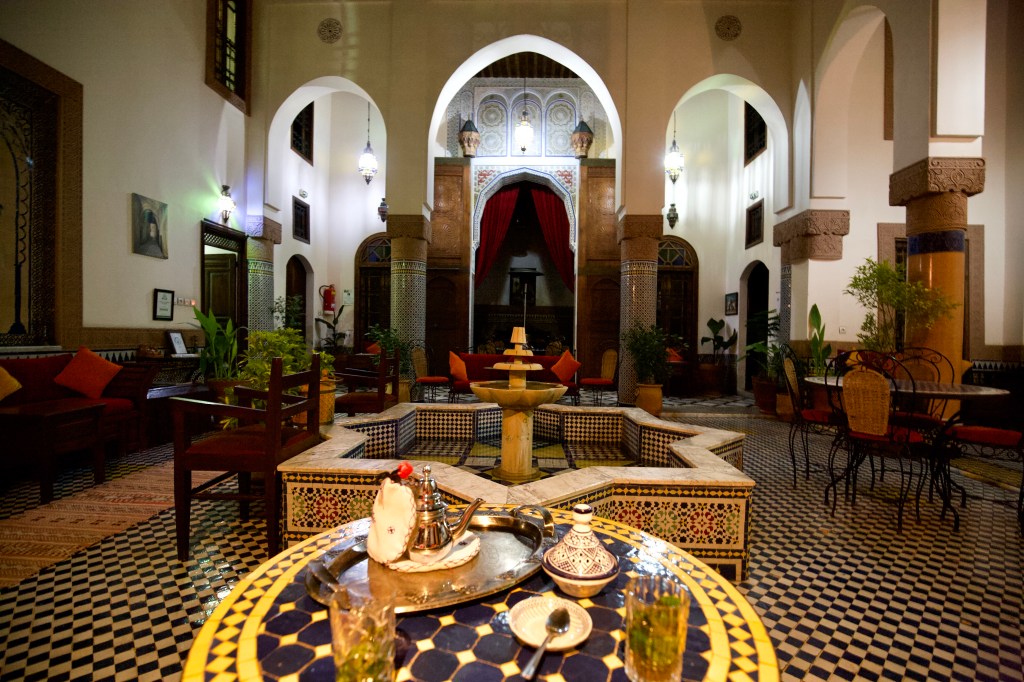
Riad–a traditional house with a courtyard–is a must experience in Morocco. We stayed at 6 different riads in 5 different cities and a village. The only night we didn’t stay in a riad we stayed in a tent. We loved riad experience and could’t get enough of it! It’s not that we don’t have a choice in Morocco. There are plenty of modern hotels in Morocco. We wanted to experience what’s unique for the locality. The architecture, decor, and atmosphere of each riad were rich with their own characters. They all made fond memories.
Marrakech
The name Morocco is derived from Marrakech. It is one of the four historic capitals of Morocco. The reddish-the color of the local earth-stucco gave the city the nickname “Red City”. The most famous attraction of the city is the open air market (souk), where you can be sure to get lost in the maze of allies of vending kiosks. The allies are narrow and the vendors can hustle, which may not suit everybody’s comfort zone. The busiest time for the souk is after dinner. It seems everybody in the city is out in the Jemaa el-Fnaa square strolling and people watching.
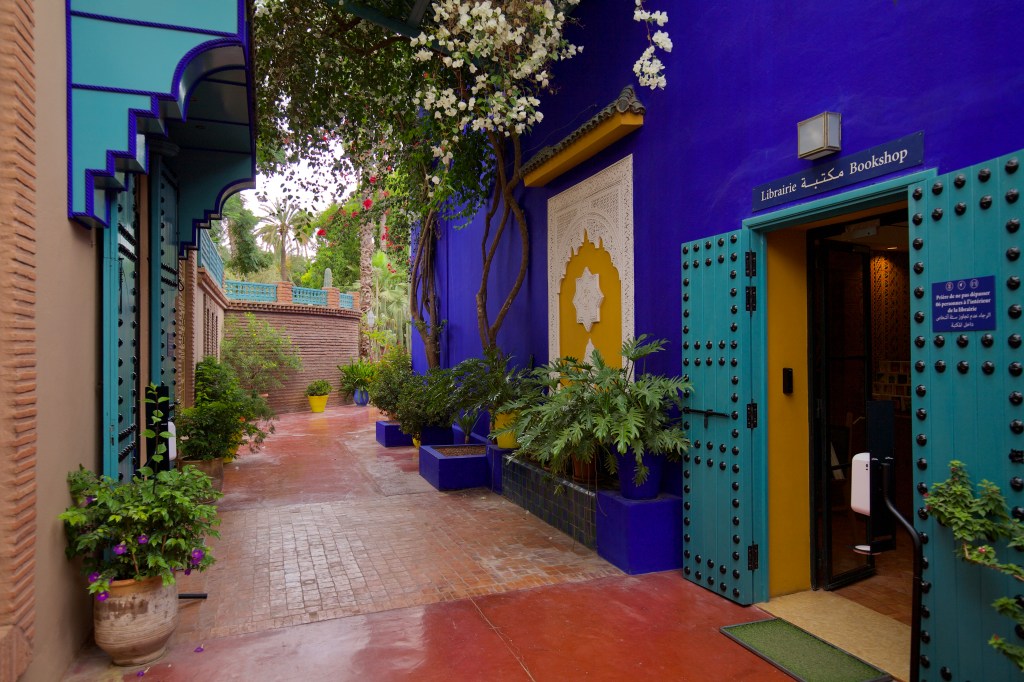
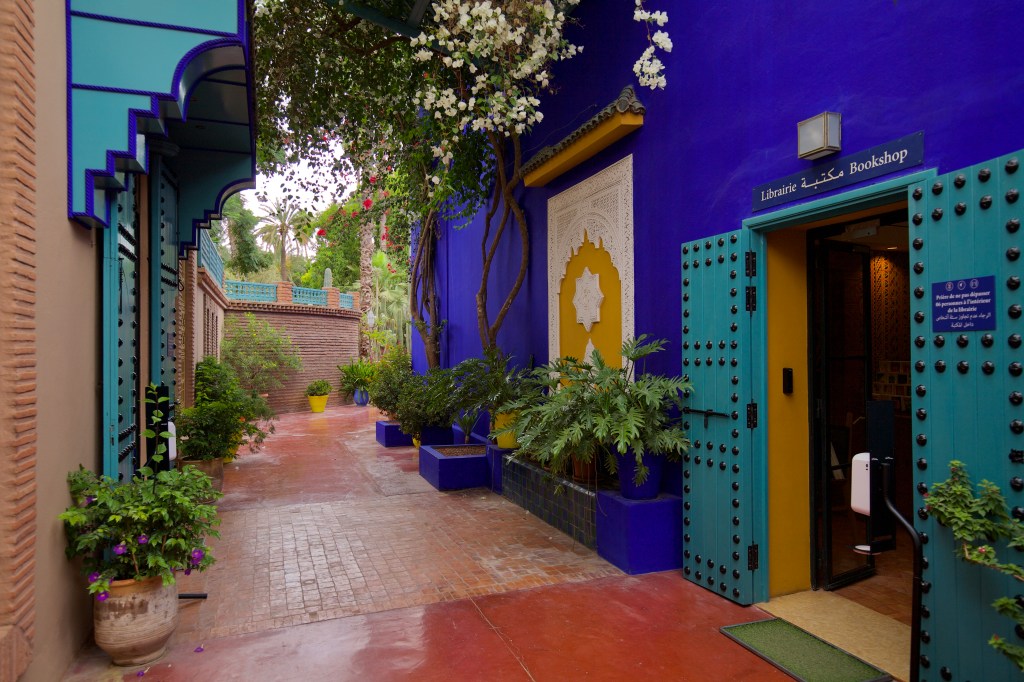
The city is also famous for Jardin Majorelle and Bahia Palace. Jardin Majorelle is a garden owned by French fashion designer Yves Saint Loren. The color of the garden is so vibrant that it leaves a lasting impression in my head, particularly cobalt blue and terracotta red. Of course there are many other colors carefully choreographed in the garden. He used his fashion palette for this garden.
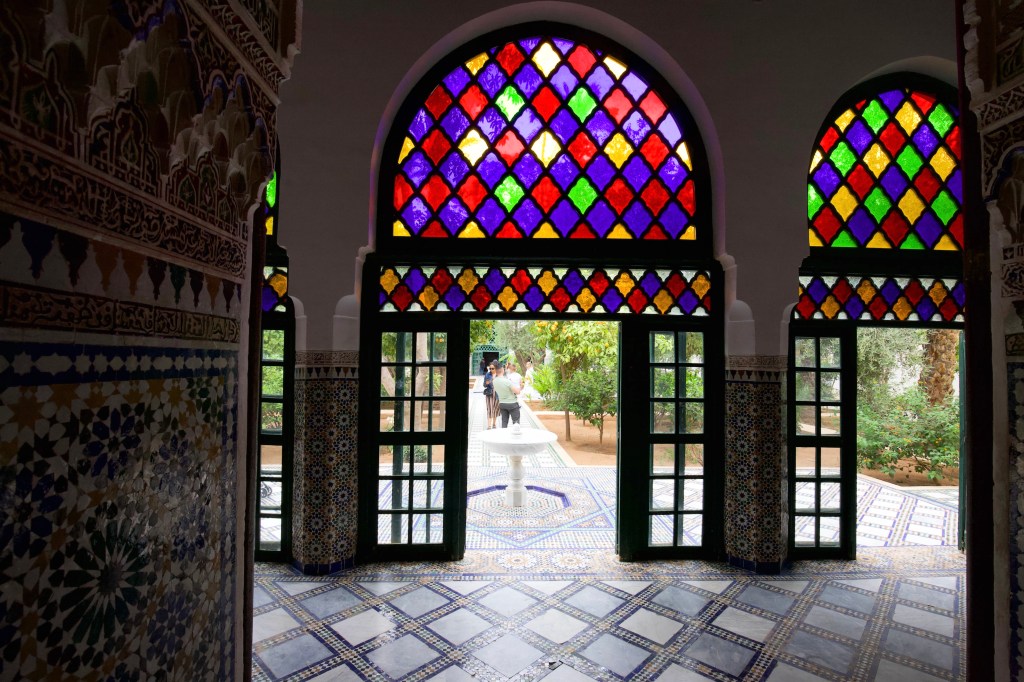
Bahia Palace is an example of Muslim architecture: courtyards, gardens, geometric layout, fountains, pointed arches, patterned ceramic walls and floor decorations. The small palace is very intimate compared to many big palaces. The size of the palace is like a buddhist temple. My favorite part is the garden with a fountain at the center and 4 partitions of smaller gardens at each quadrangle of the big garden. The fountain is uniquely Islamic, with a symmetrical 16-sided footprint, decorated with geometrical ceramic pieces.
Dades Gorge
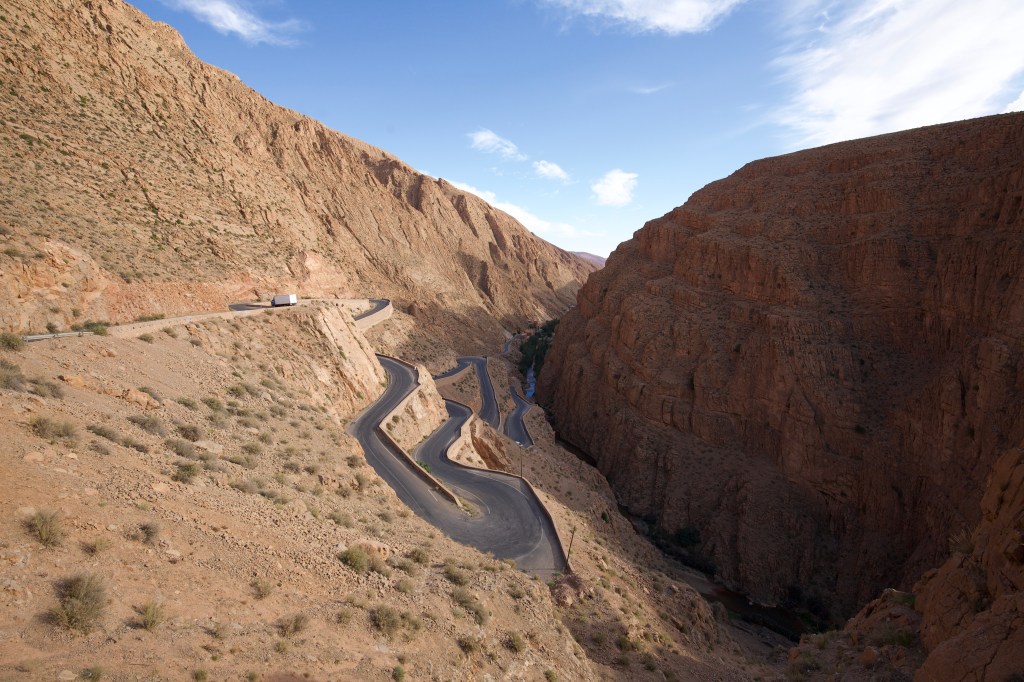
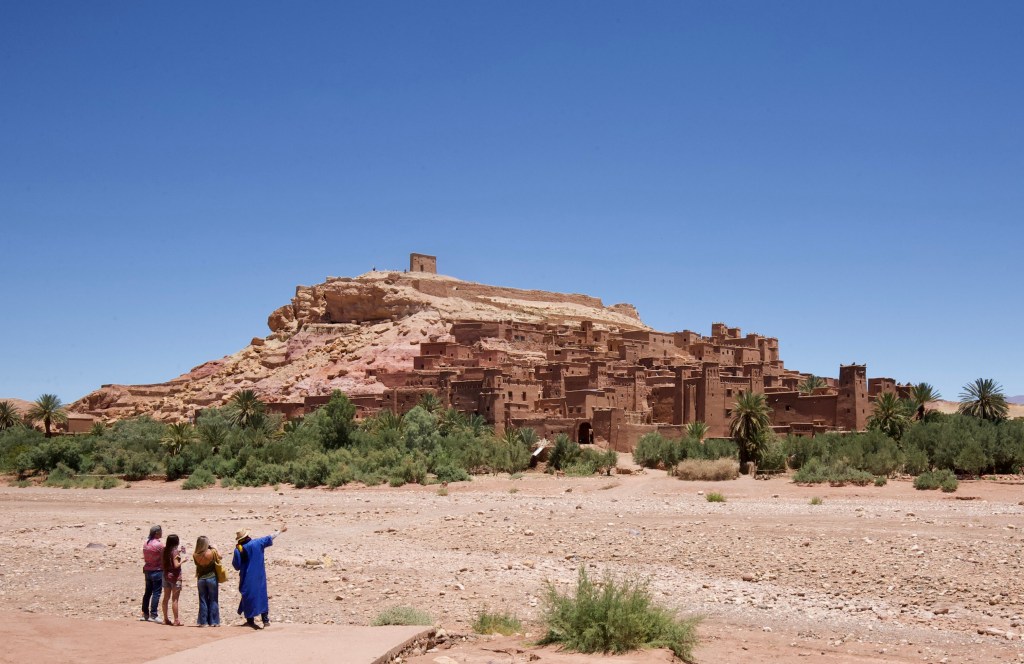
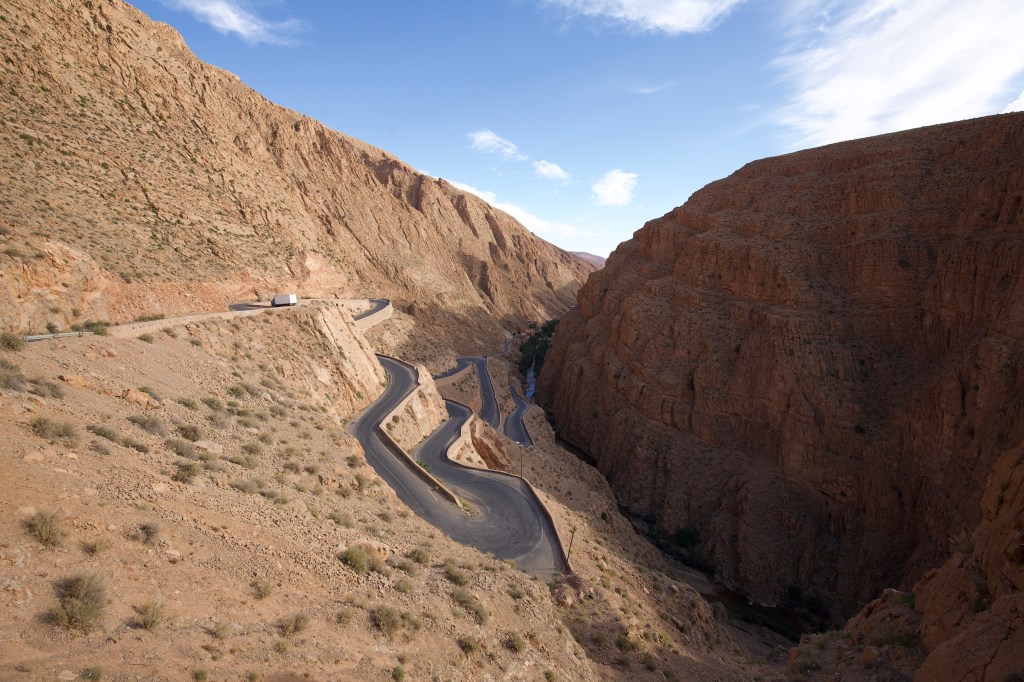
Dedes Gorge is on the way from Marrakech to the Sahara Desert. We made a stop at Aiit Ben Hadu, an ancient castle of red adobe complex built around a hill on a river bank. We got to Dades Gorge in the late afternoon. The gorge is like a miniature Grand Canyon with slanted red rock formations. The small village where we stayed for the night was flanked by crop fields on a flood plain. In the middle of the flood plain is a small creek lined by flowery shrubs. In the morning, I ventured to the fields and saw mostly ladies gathering branches and hays along the creek, saying “salam” to me when passing by. A leisurely farming scene.
Sahara Desert
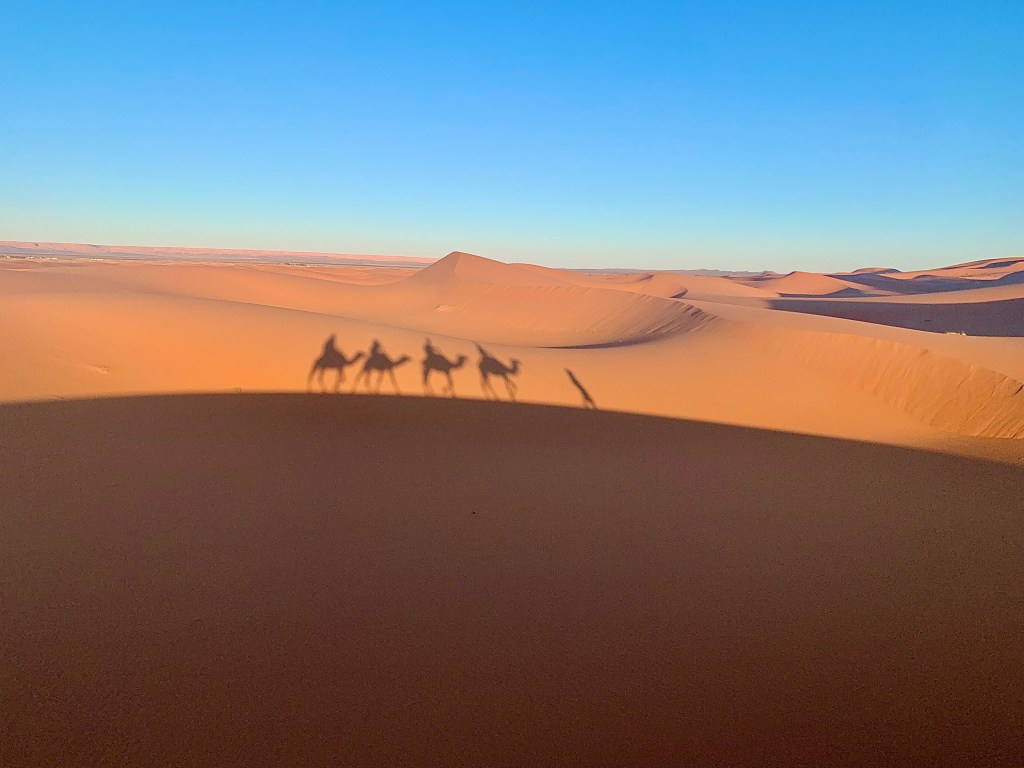
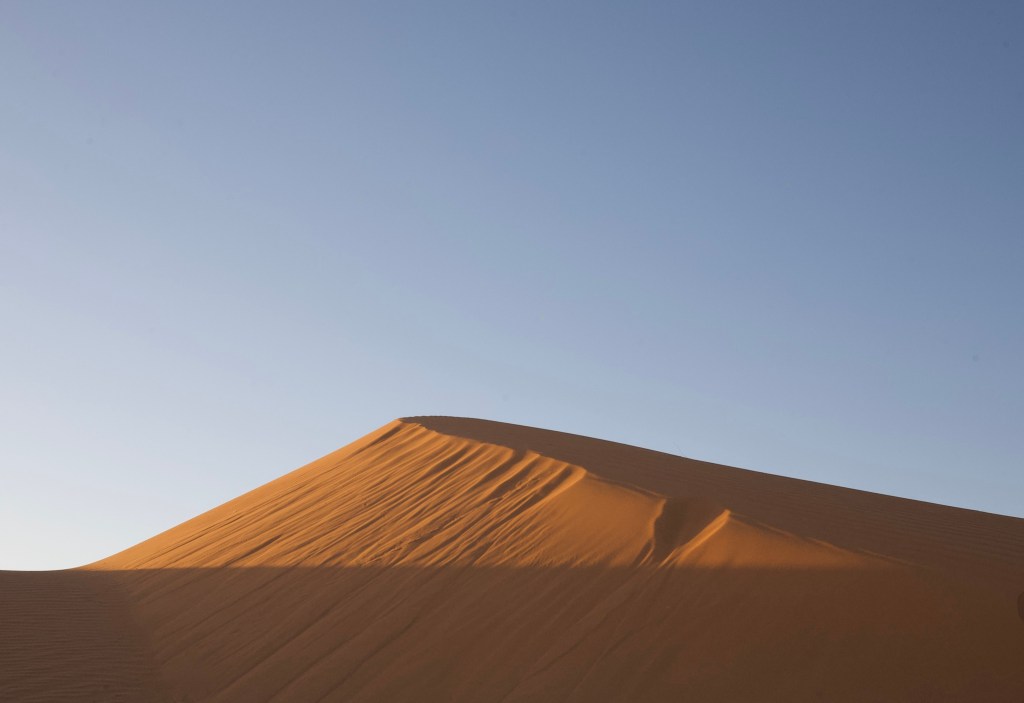
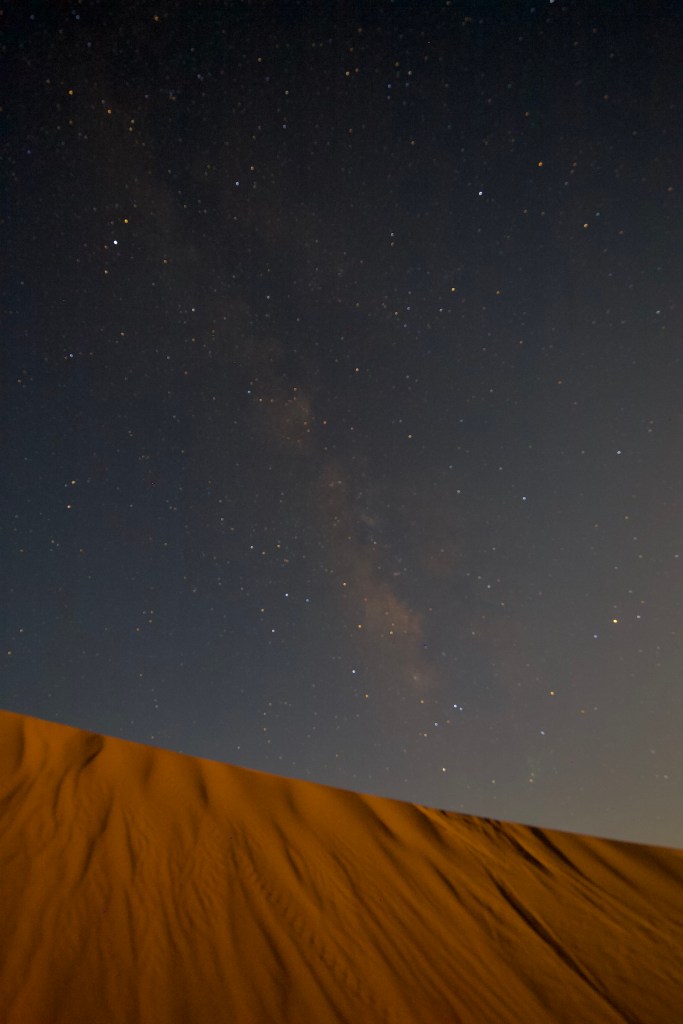
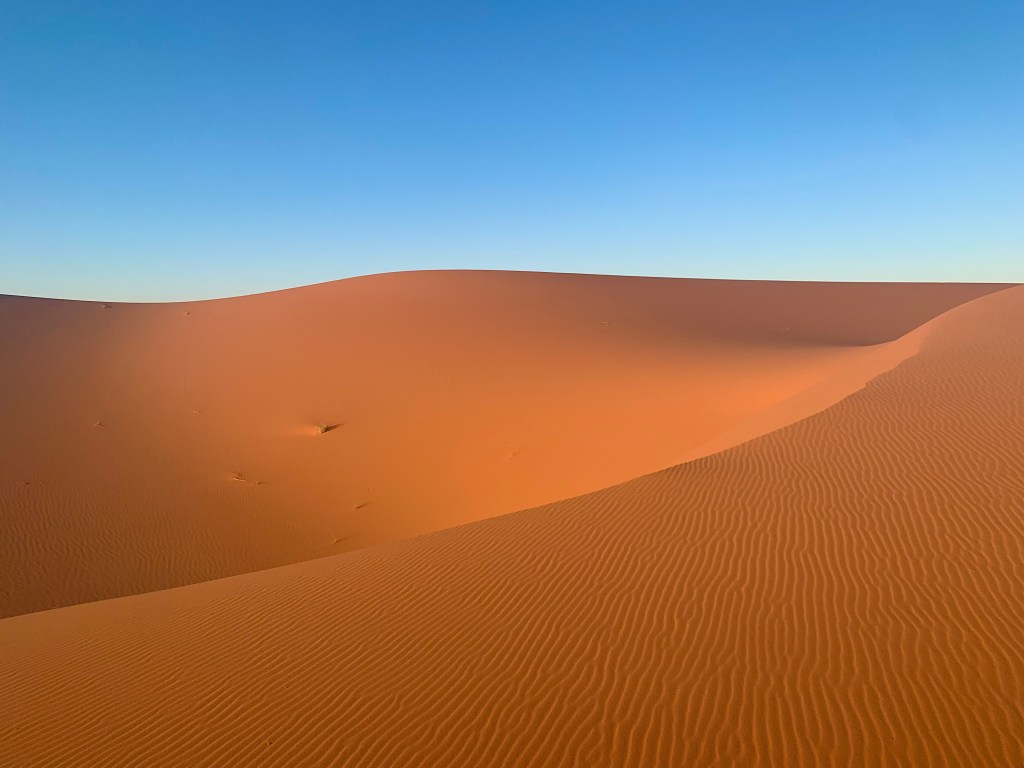
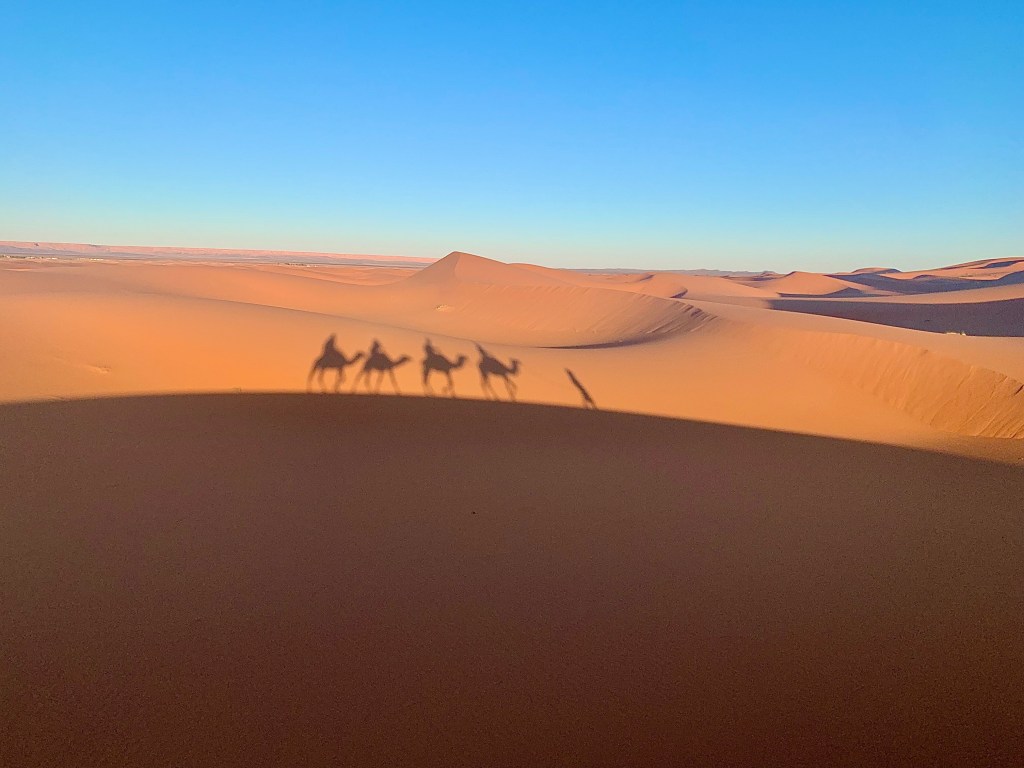
The highlight of this trip has to be the Sahara Desert. Camel ride, dune climbing, feast, camp fire, star gazing, and tent camping in the desert, we got the whole package. Our “international” nomadic tribe consisted of 4 camels, their riders and the guide. Following the guide were 3 of us and a female tech executive from Silicon Valley who was traveling solo. The guide is a young local lad in colorful traditional robe and turban. The ride started from a foot hill of the endless sand dunes. We mounted the camels resting on the ground. After making sure we were holding tightly the handle, the guide signal the camels to rise one by one. Suddenly I felt like I got a balcony seat from the back of the camel. The arrival was timed so that when our “tribe” climbed the sand dunes, the desert got more and more red under the setting sun. As we get deeper and deeper into the desert, all we could see was our long shadows on the golden red sand. There was nothing in my view but blue sky, red sand, and pure tranquility.
My mind was enveloped by sand. On a macro scale, I’m no different from a grain of sand. Sands on the dunes are silicon-based; we humans are carbon-based. Carbon-based humans are developing silicon-based AI chips. AI is replacing humans at an accelerating pace. Silicon-based intelligence is taking over carbon-base intelligence. What a circle! But I digress.
We dismounted the camels in the heartland of that patch of the desert after a long ride. The sun was about to set. We took off the shoes and the guide led us to charge up the sand dune which is the size of a hill. The dune was soft and the sand sank and shifted under our feet. Two steps forward, one stop backward, we trudged. The guide had to turn back, unwind his turban, and use it as a rope to tow the 2 ladies up one by one and little by little. We climbed, with hands and feet, to the summit just in time to take a picture before the sun completely set. Phew!
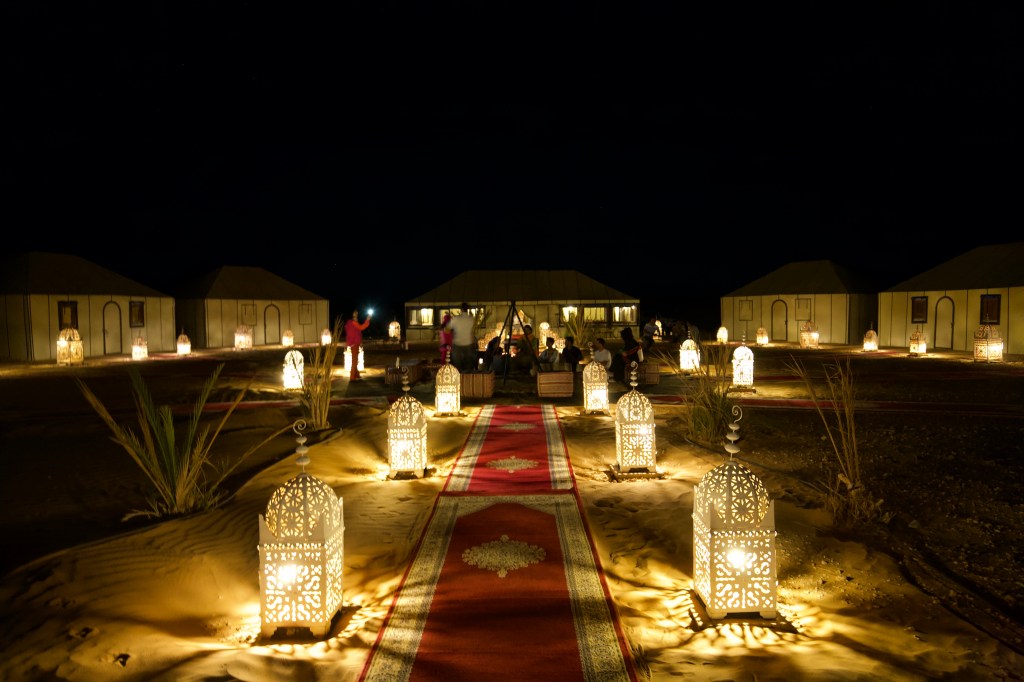
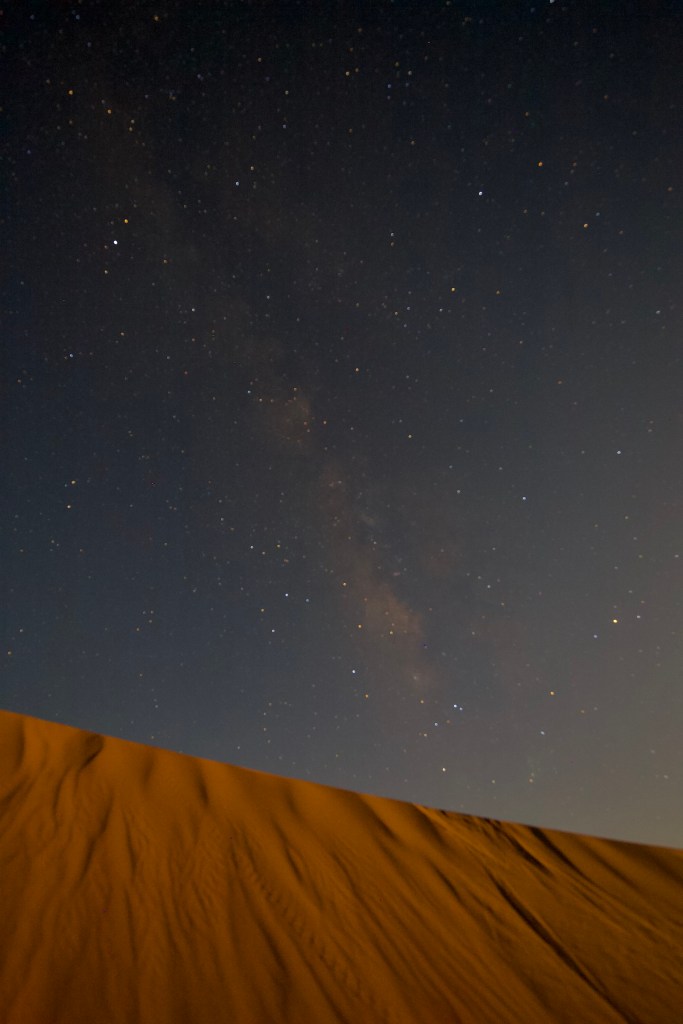
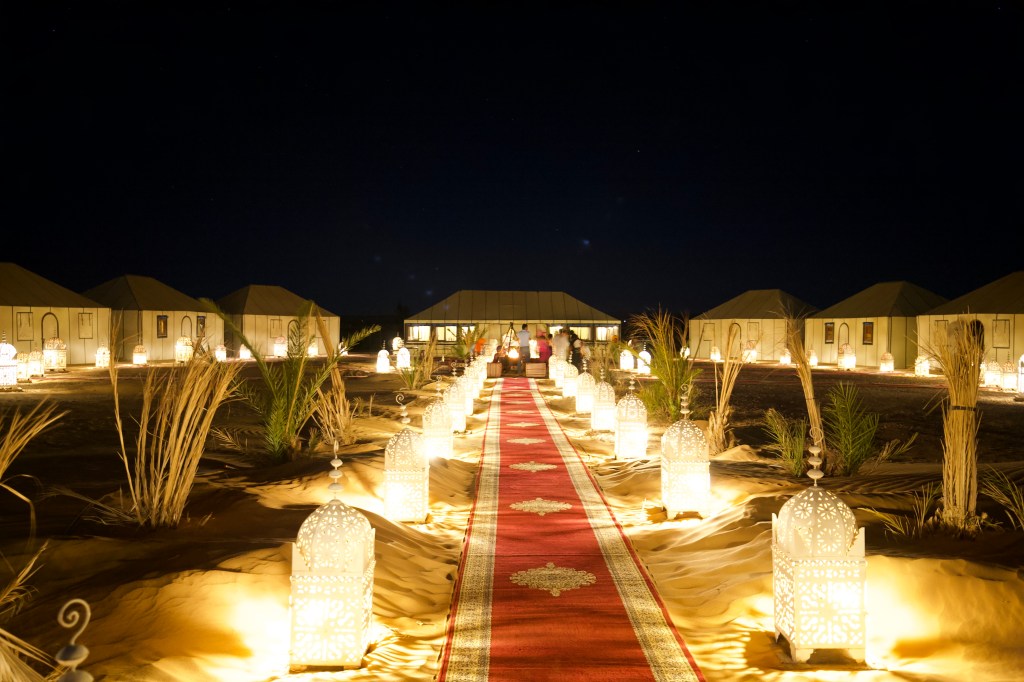
Everything was timed perfectly. We went back to the camp under star light, thanks to the guide and the camels for the navigation. Our camp was a 7-tent complex connected by rugs and illuminated by traditional lamps, with a camp fire at the center of the complex. The tents were actually spacious luxury suits with beds, a bathroom and shower made of canvas anchored on sand. The large middle tent was a feast hall. A sit-down multi-course feast was served under the large tent, followed by live traditional music around the camp fire under the starry sky, and everybody danced around it, cel ebrating this unique place and experience.
Fez
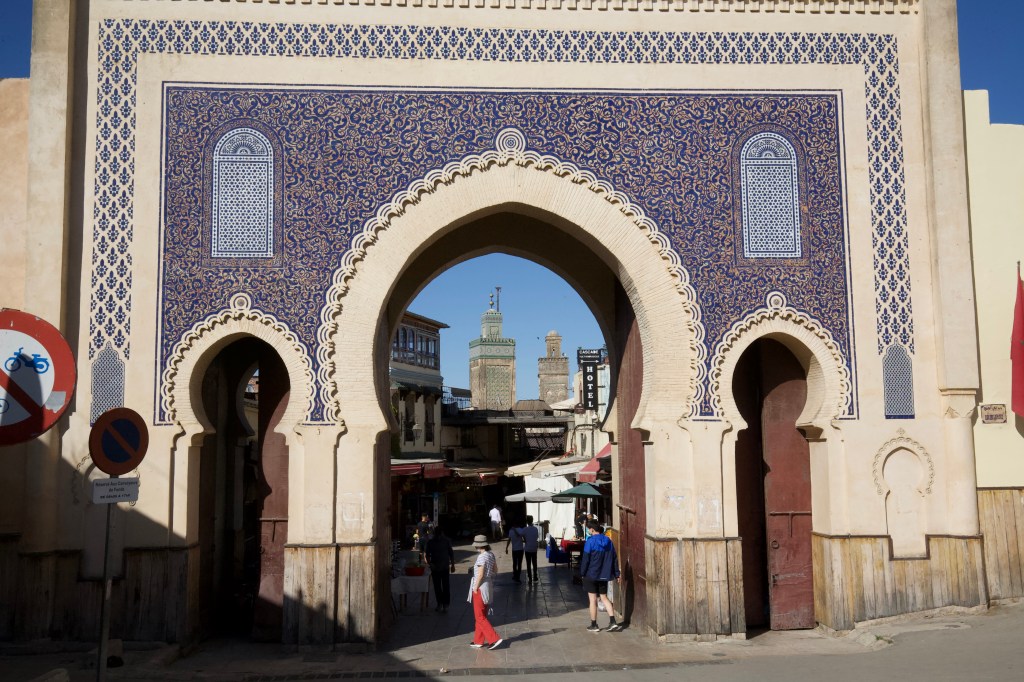
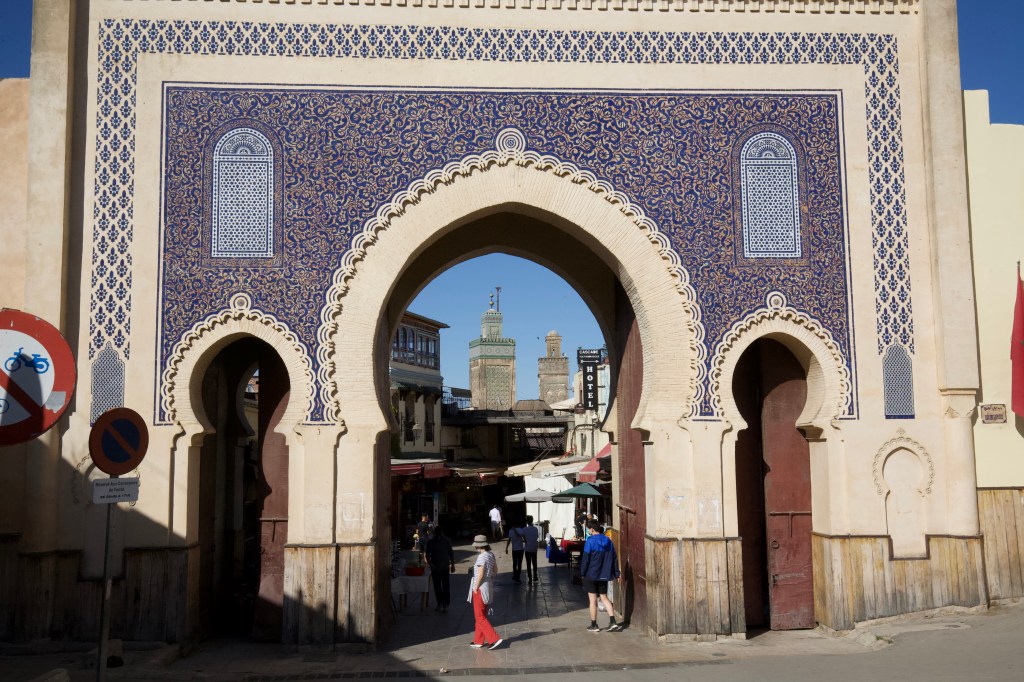
Fez was the biggest of the imperial cities (former capitals) in Morocco. Its old city was massive and had extensive souk districts, less rowdy than Marrakech. Our travel guide arranged for us a local guide, an Arabic lady (both our driver and travel guide were Berbers) who lived in Fez. We visited the Jewish district where many Jews left for Israel over time. A vibrant jewelry street still thrived in the district. A hands-on experience was at a ceramic workshop where my son operated a turn table and made a crude pot under a craftsman’s guidance. A few craftsmen were chipping ceramic tiles to make traditional fountains by arranging the pieces into decorative patterns. The Muslim religion doesn’t promote human images, instead, uses geometric patterns for decoration. The owner told us that the English word “algebra” came from Arabic “al-jabr” meaning reuniting the broken pieces. One of the top attractions in Fez, the Blue Gate, is a prime example of the exquisite art of rearrangement of the broken ceramic pieces on a large scale of an imperial city gate.
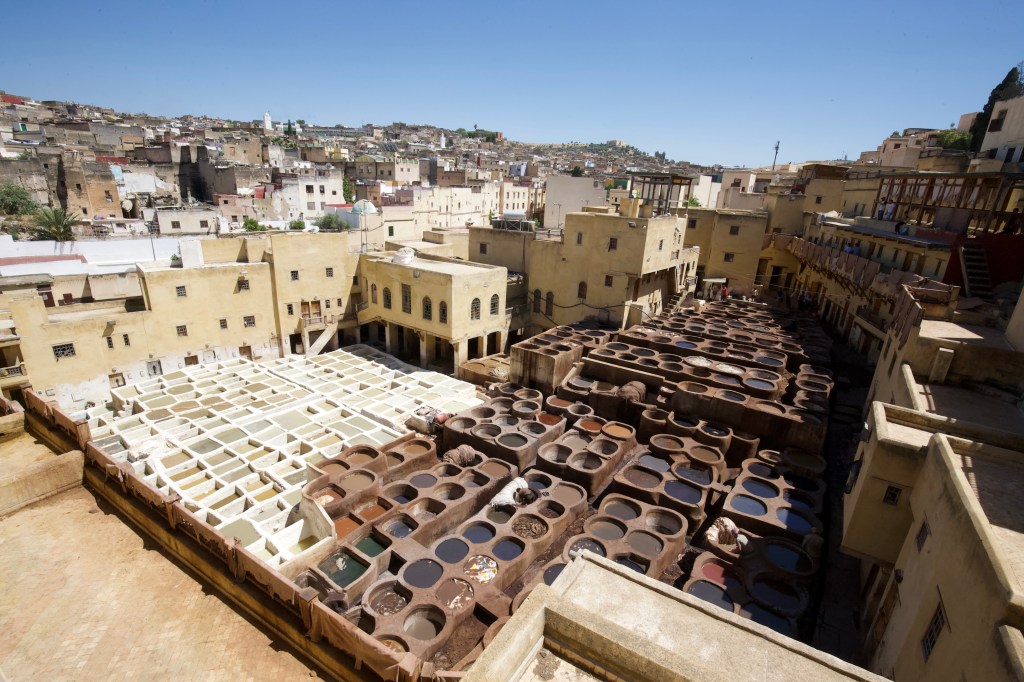
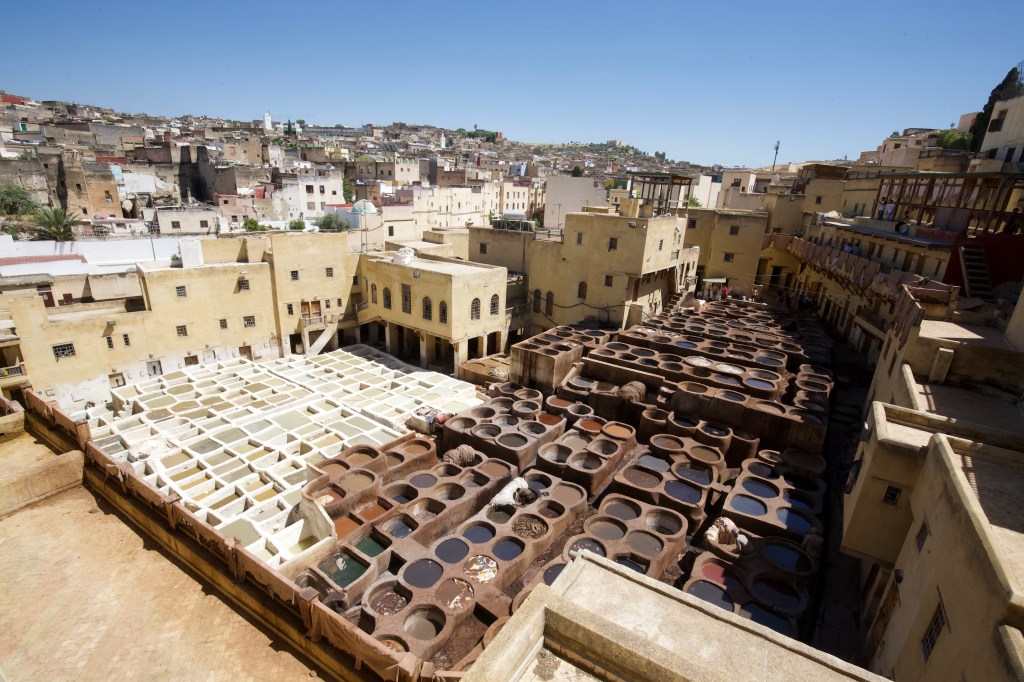
A requisite attraction of Fez was the tannery, which felt like a small village surrounding a central courtyard of hundreds dyeing pools. Streams of donkeys shipped loads of raw hides to the tannery everyday. The hides got processed and turned into colorful leather goods- bags, luggages, and clothes. They still used a natural chemical compound to cure raw hides: bird droppings. Not good for your nose, but it’s good for the environment.
Chefchaouen
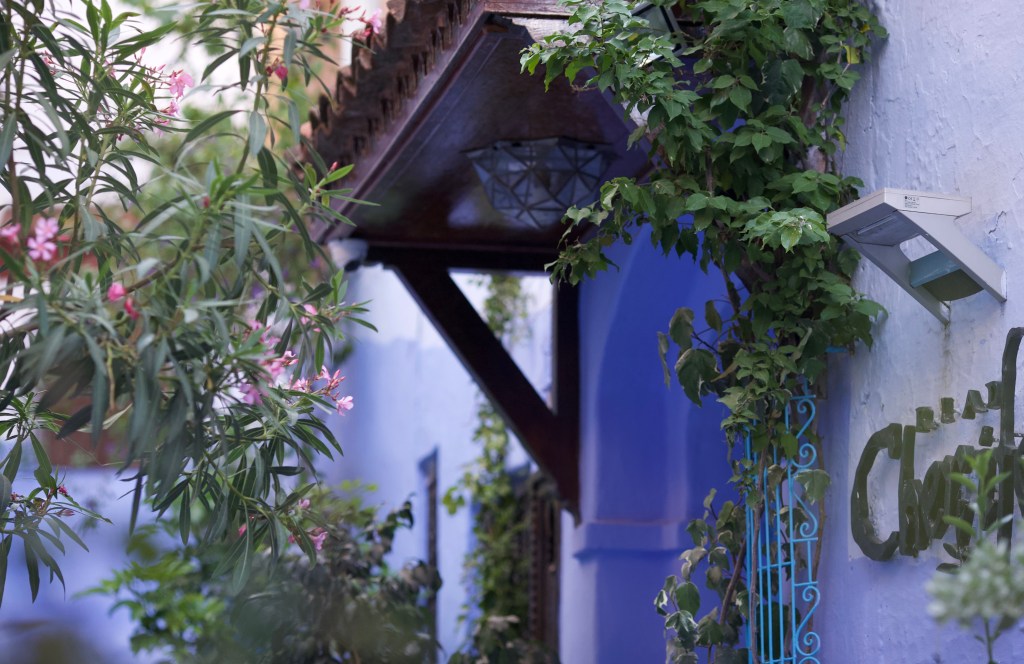
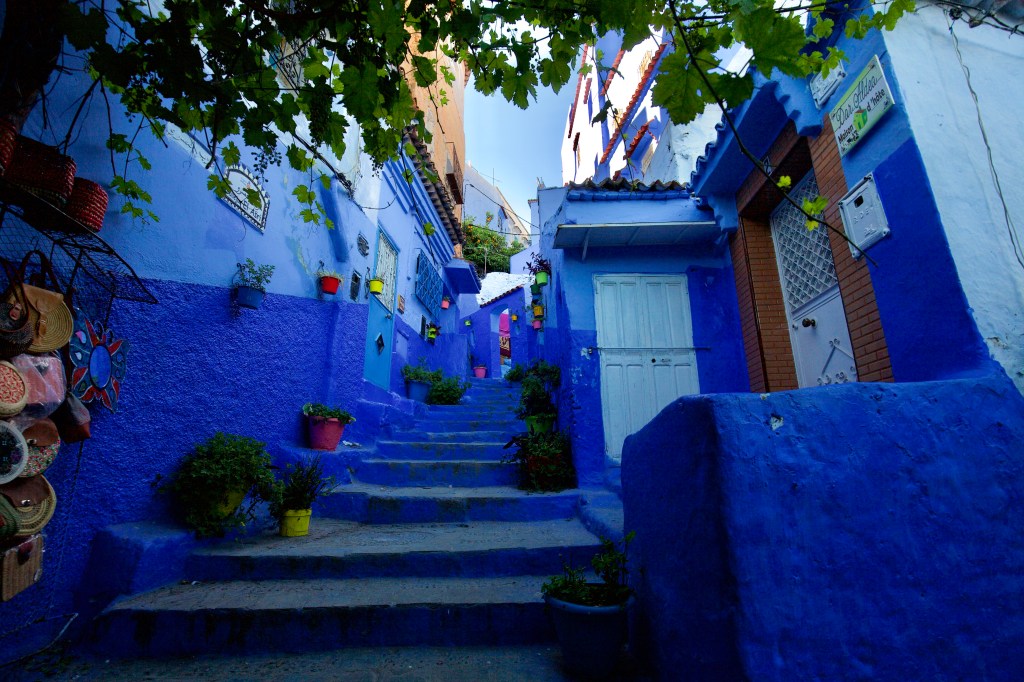
Nicknamed the“Blue City”, the city on a slope of Rif Mountain was famous for houses painted in many shades of blue. It was the most walkable city among the Moroccan cities that we visited. Most allies were not wide enough for a car. It was nestled in the mountains with steep hills hanging above and cascading creeks running by. A popular sunset vista was the Spanish Mosque on an opposite hill top overlooking the city. Sitting on the terrace of the small church converted mosque (now defunct), you can see the sun setting into distant mountains and watch the blue city changing its shade gradually from vivid blue and white to gold.
Asilah
Upon our request and with a cost, the tour operator added Asilah to the standard itinerary because we’d like to visit a beach town. That request proved to be uneducated. Rabat is also a beach town on the same Atlantic coast. That was probably the reason that Asilah was not on the tour operator’s originally recommended route.
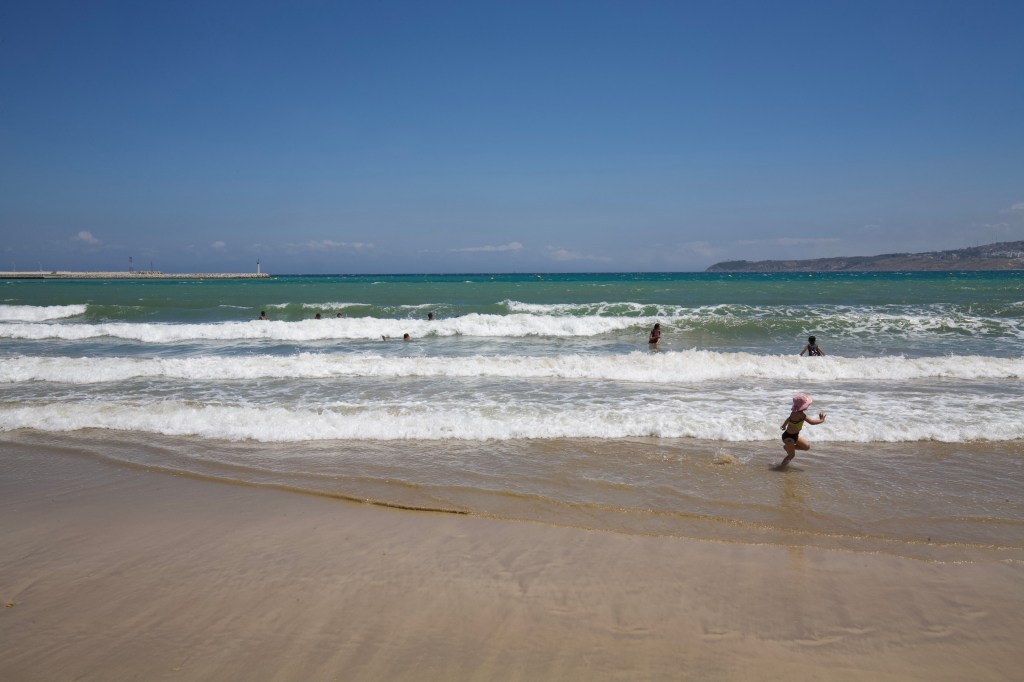
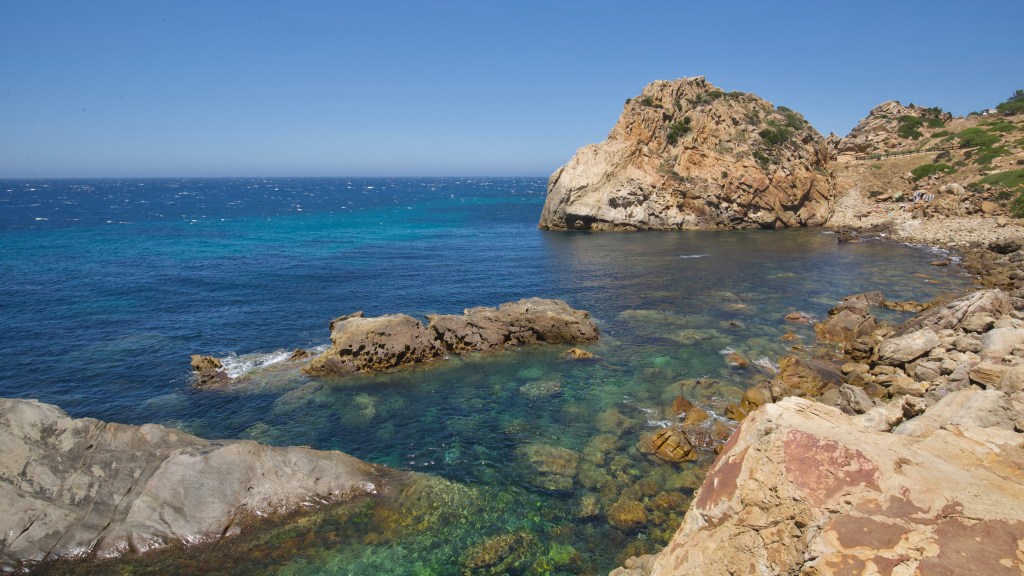
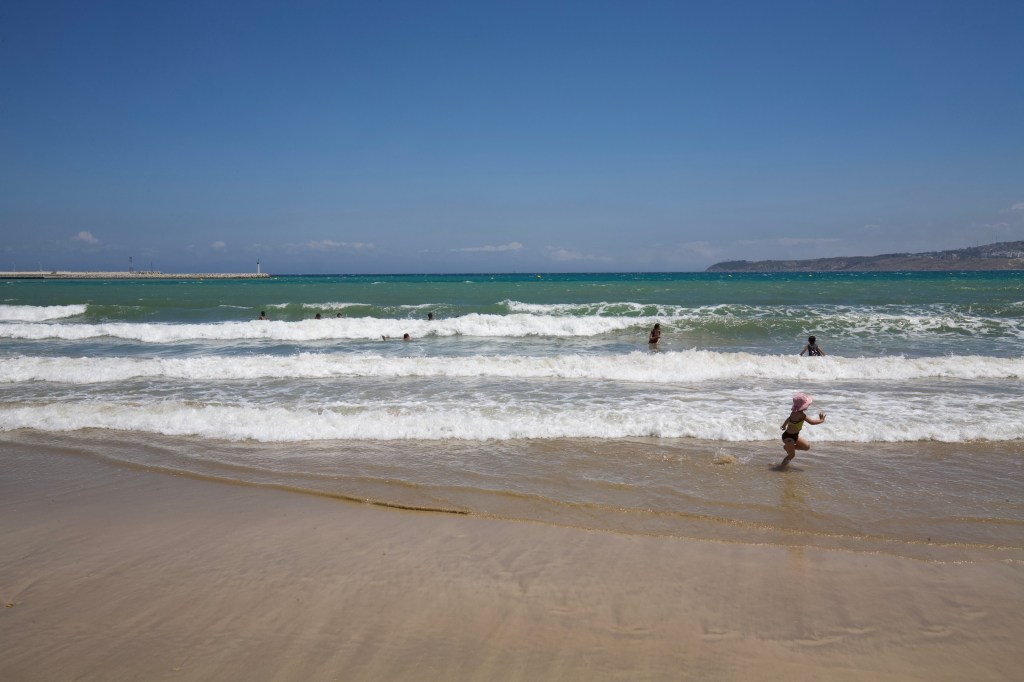
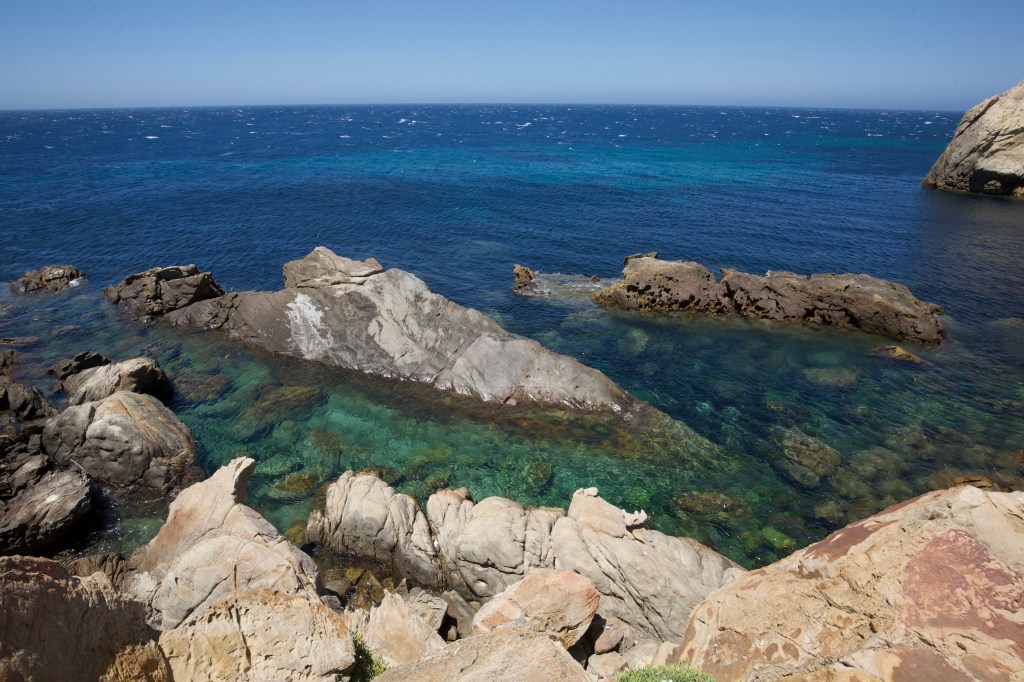
On the way from Chefchaouen to Asilah, we stopped by Tangier, a very modern city with wide beaches and big ports. We didn’t get to see Spain across the Gibraltar Strait due to the poor air quality that day. We also stopped by Cape Spartel, a beautiful vista point where the cape demarcated the Mediterranean Sea from the Atlantic Ocean. The water there has the unmistakable tint of Mediterranean: sparkling clear in a spectral of blue shades. Many people swam and fished from the big rocks that jut out into the ocean.
Asilah had a well preserved and scenic city wall that ran along the sea shore. The wall was several stories tall and had a width of a country road at the top. It connected many bastions with different sizes and shapes that protected the city. The top of the wall was a pedestrian paradise. Musicians played instruments, tourists and locals strolled and biked, people waited for and watched sunset into the ocean from the vista on the top of the wall.
Rabat
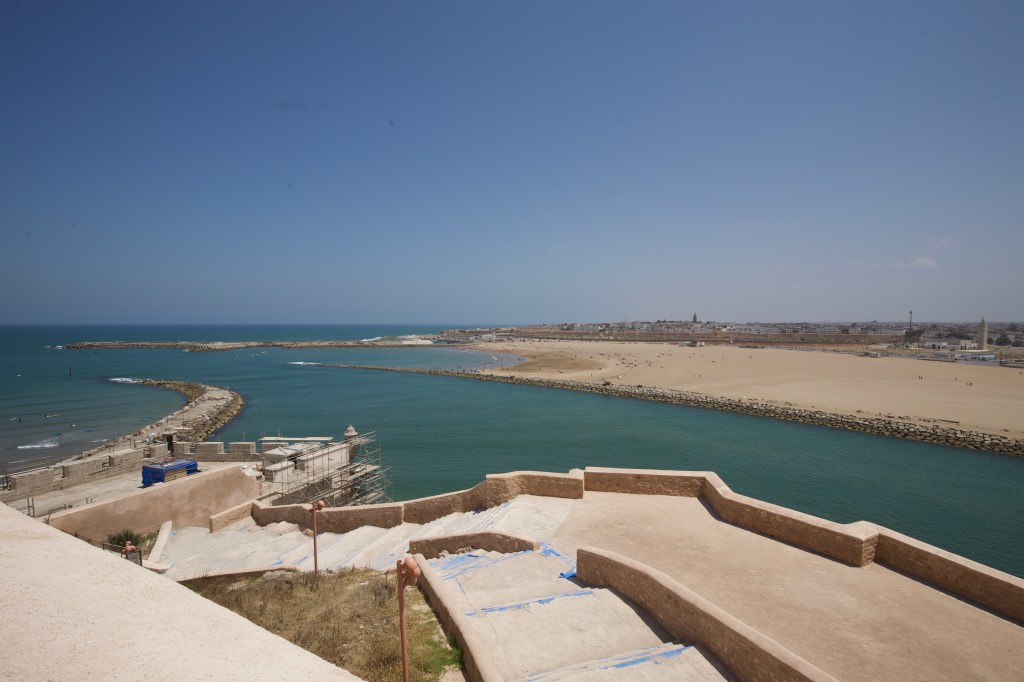
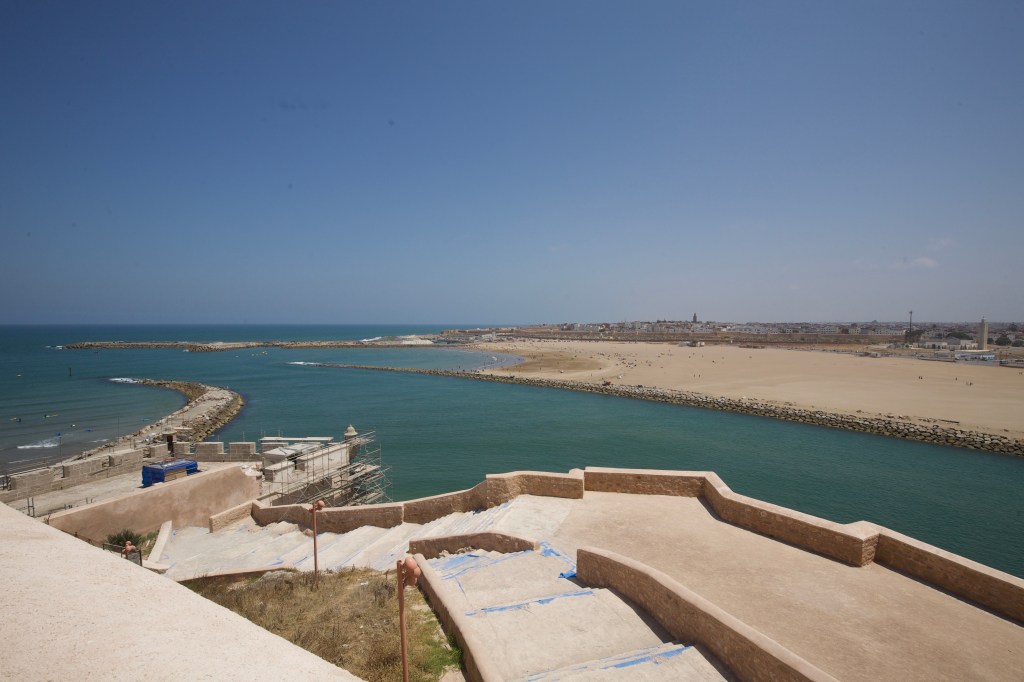
One of the capital city’s top tourist attraction is Udayas citadel, a walled city at one corner the city on a large cliff off the Atlantic Ocean. The citadel is a maze of pedestrian allies with a well marked path to the main terrace overlooking the Atlantic ocean and the mouth of river Bu Regreg. Rabat had many beaches and ocean cliffs that were quite walkable. A delicious traditional Moroccan meal at a restaurant, Dar Naji, just outside the old city wall marked a perfect end to our trip.
Morocco, Moors, and Europe
Being the closest point to Europe on the Africa continent, Morocco is a springboard to Europe from Africa. Between the 8th and 15th century, North African Berber and Arab Muslims, also known as Moors, invaded and occupied the Iberia peninsula and island of Sicily. The Muslim-ruled Iberia peninsula was called Al-Andalus. In the 15th century, Catholics regained power on the Iberia peninsula (“reconquest”, as it’s called). There is an autonomous region called Andalucia in southern Spain, reflecting its Al-Andalus past. While geography seems eternal, history is constantly being written by people. Iberia and Sicily went through Christian-Muslim-Christian cycles. People showed great resilience, and their cultures were among the most colorful.
Today, the age of military-religious conquest and reconquest is over (no?). The ancient continental battle grounds of Al-Andalus and Sicily have become tourist hot spots due to the fusion of western and eastern cultures. Let’s treasure the peace and prosperity that ensues it.
Like a Moroccan would say to greet or part ways from someone-“may peace be upon you”, Peace, my friend!
They were born in Sicily, in different eras. My mom voiced her concerns when I told her that we were going to Sicily for vacation. She knew about the place’s association with the notorious organized crime network. Before I set foot on Sicily, what I knew about Sicily was mostly from the movie “The Godfather”. But that was not the reason I decided to go there. I heard that Sicily had an extremely rich cultural heritage and I wanted to explore it.
Our Trip
We embarked on the Sicily trip in March 2023 after a friend made multiple trips there within a span of a few years. Sicily must possess something special if it had made her visit there again and again, we thought.
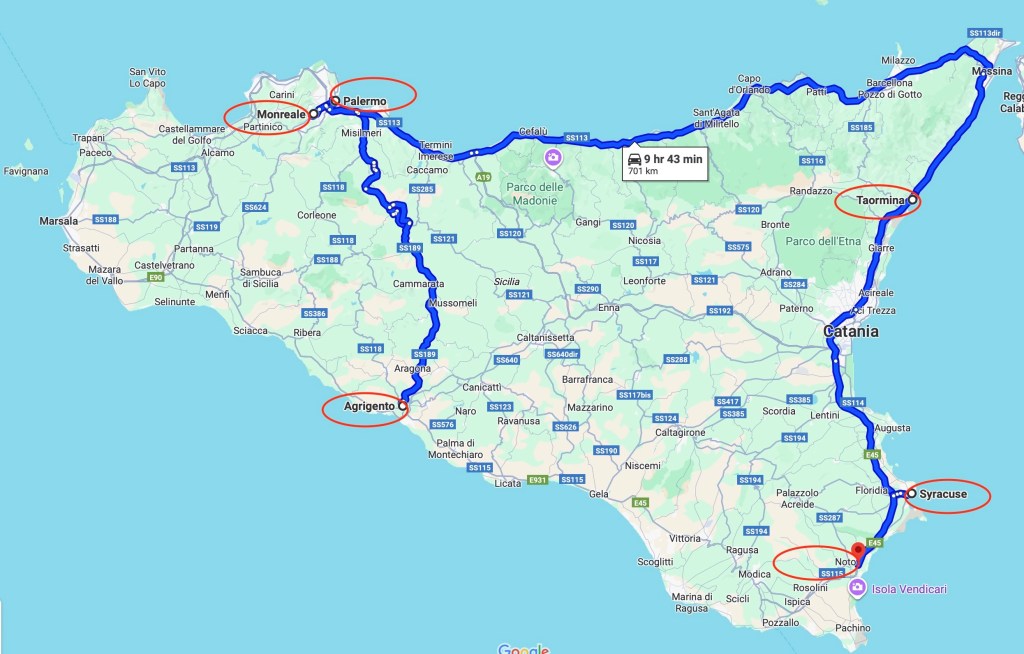
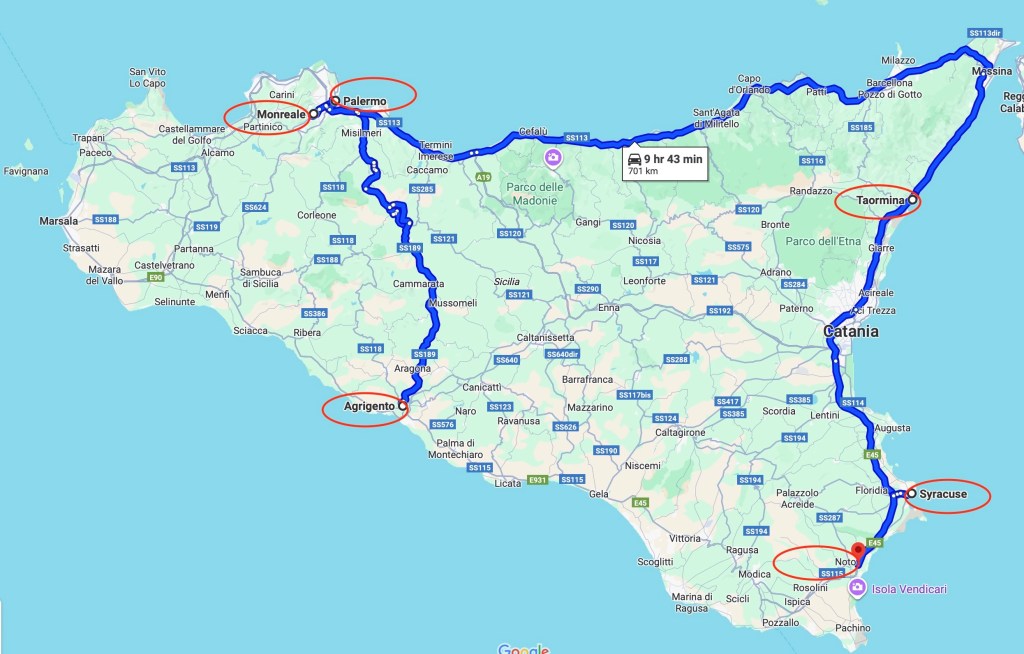
We flew to Palermo, took a train to Taormina, then to Syracuse, then a bus from there to the Catania International Airport to depart from Sicily. The whole trip was about 11 days. We had 3 stops and spent about 3 full days on each stop: Palermo, Taormina, and Syracuse. We took 3 day trips: a day trip to Monreale by bus and a day trip to Agrigento by train from Palermo, and a day trip to Noto by train from Syracuse.
Palemo
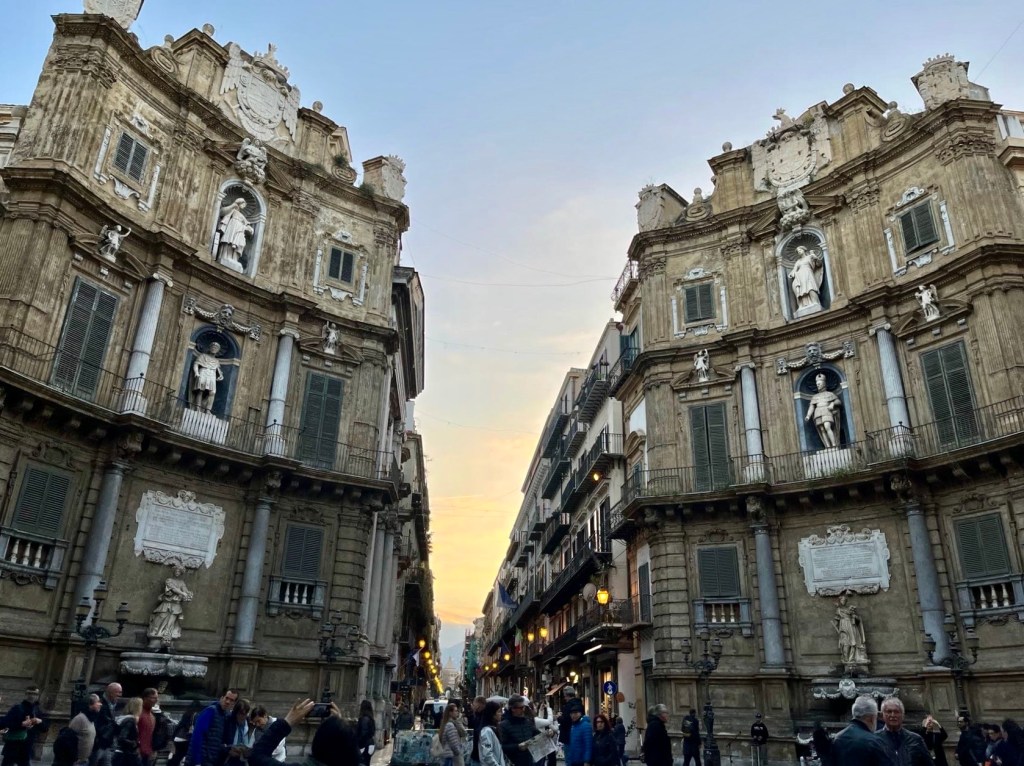
Four Conners is the intersection of two major pedestrian streets, and is the center of activities in Palermo. Each corner stands a heavily decorated Baroque building with fountains, statues, balconies. It is lively and crowded. Live music and street artists of all sorts tend to perform here. Open air markets, restaurants, museums, libraries are either on the street or close by. Our vacation rental was nearby. So we come here at twilight almost every evening to eat, to stroll, to feel the vibe, and to see people and the ornate building facades.
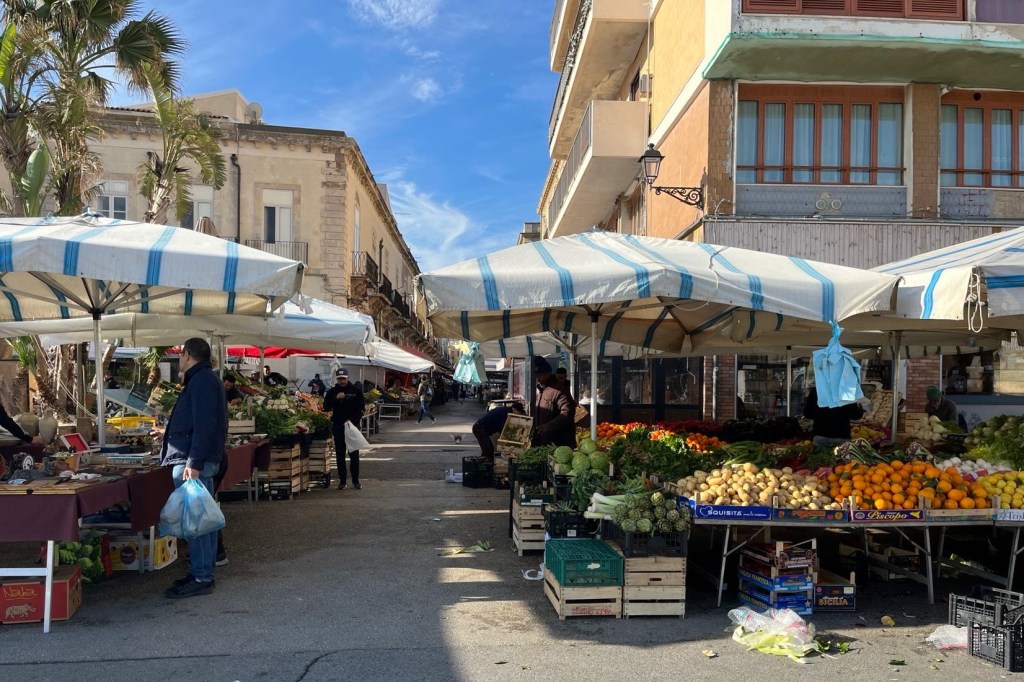
There are several open air markets in Palermo. I suggest a visit to at least one market just to feel the abundance of Sicilian food culture and get a taste. I envy the diversity and freshness of their food.
Monreale
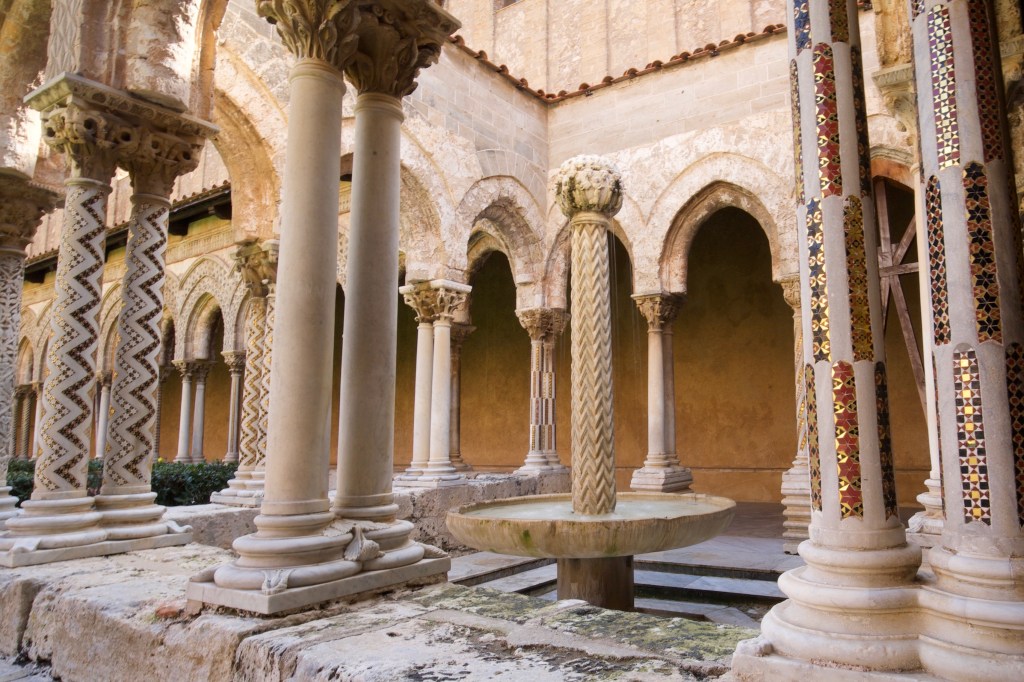
Monreale is a small hill top town about a half hour bus ride from Palermo. It is known for the basilica and its cloister, mosaic art, and the roof top terrace. The basilica is in typical Norman style, with two beefy square bell towers at one end. It is best known for two things, the Byzantine style mosaic wall art that depicts Noah’s Arc stories, and the cloister in its attached monastery. The mosaic art rivals any Byzantine mosaic artifacts that I’ve seen. The cloister is influenced by Arab style. The columns are slim compared to Greek and Roman columns. The columns and capitals are either inlaid with glistening geometrically patterned glass or carved with bible stories with vivid figurines such as Adam and Eve. The details in these columns and capitals are shockingly elaborate.
A few blocks from the basilica we sat in the plaza at the front of a restaurant and enjoyed lunch under the lovely Sicilian sun, watching passers-by on the street, colorful clothes on the drying lines between the balconies on colorful buildings, and a well dressed local couple sitting at the next table to us enjoying their lunch and wine. A relaxing atmosphere really needs to be soaked in.
Agrigento
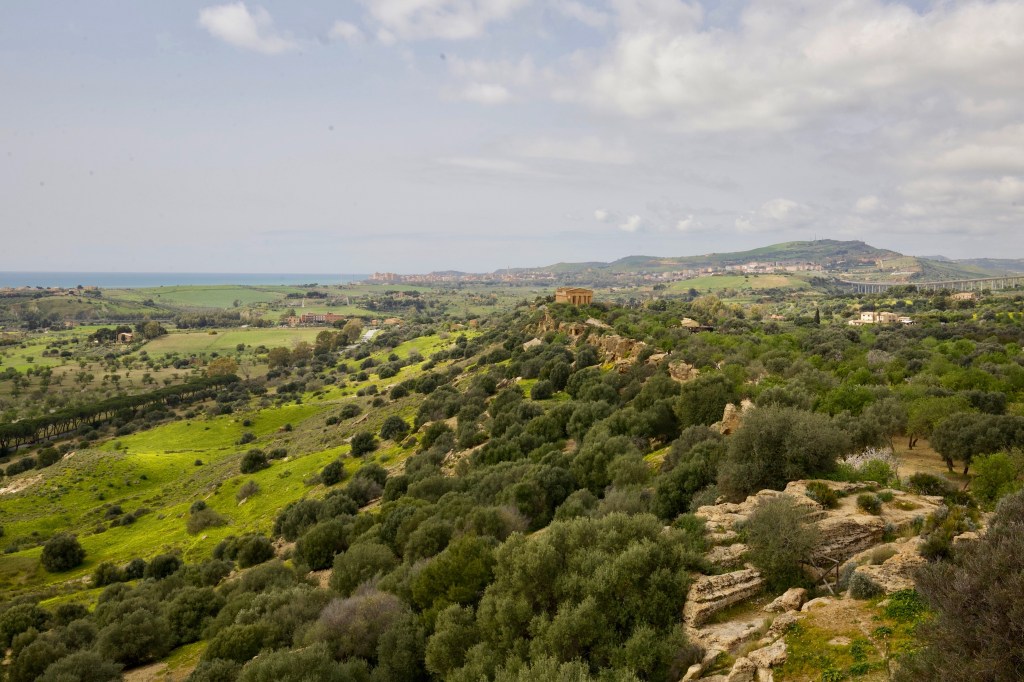
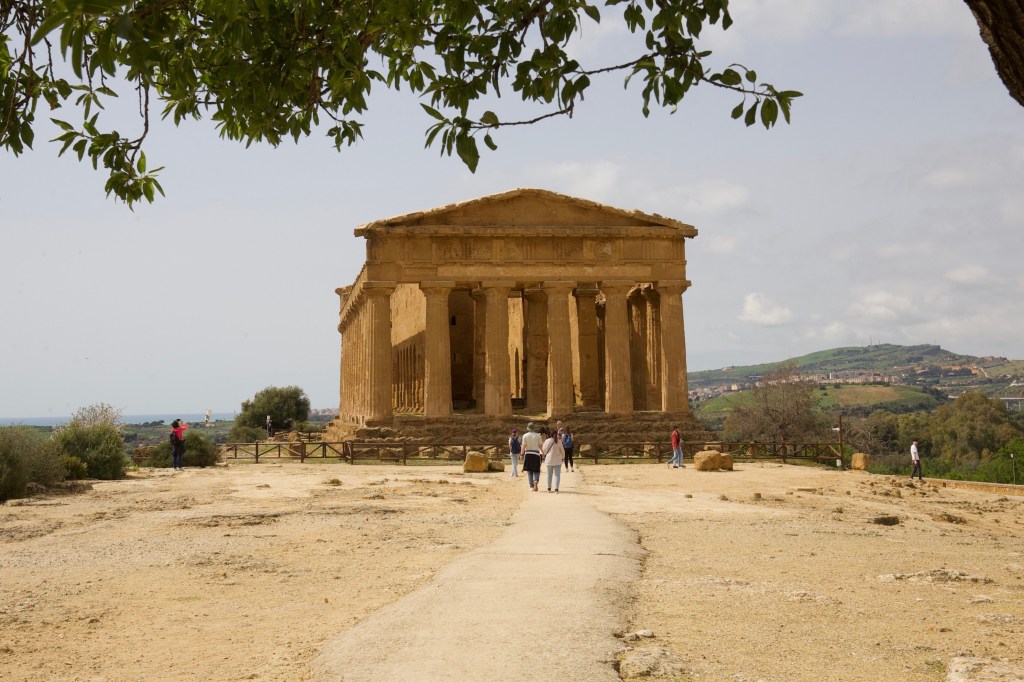
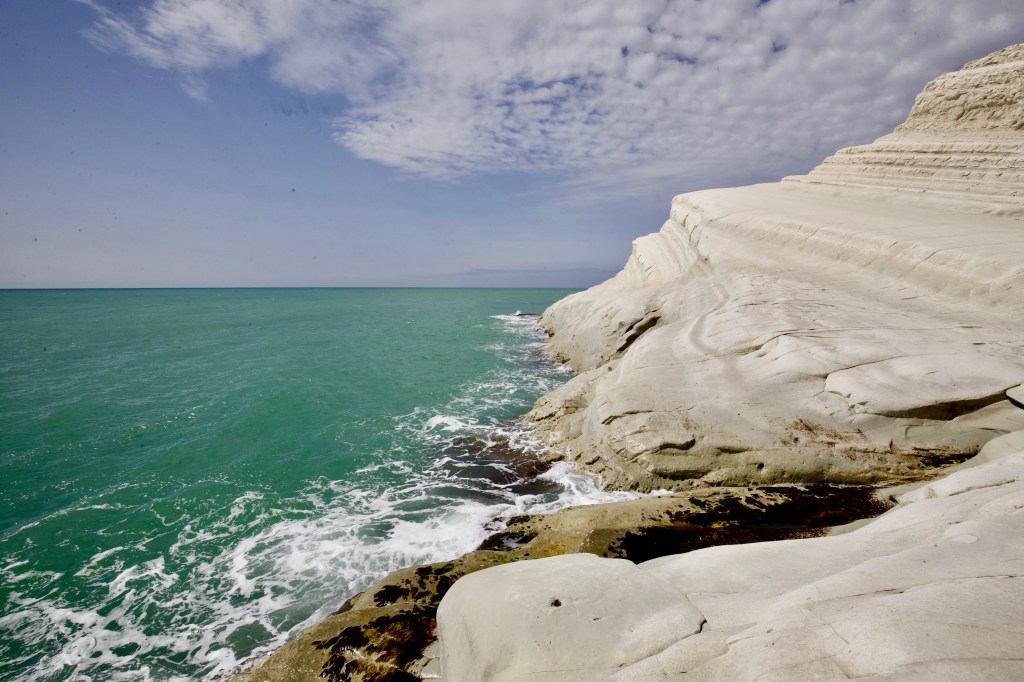
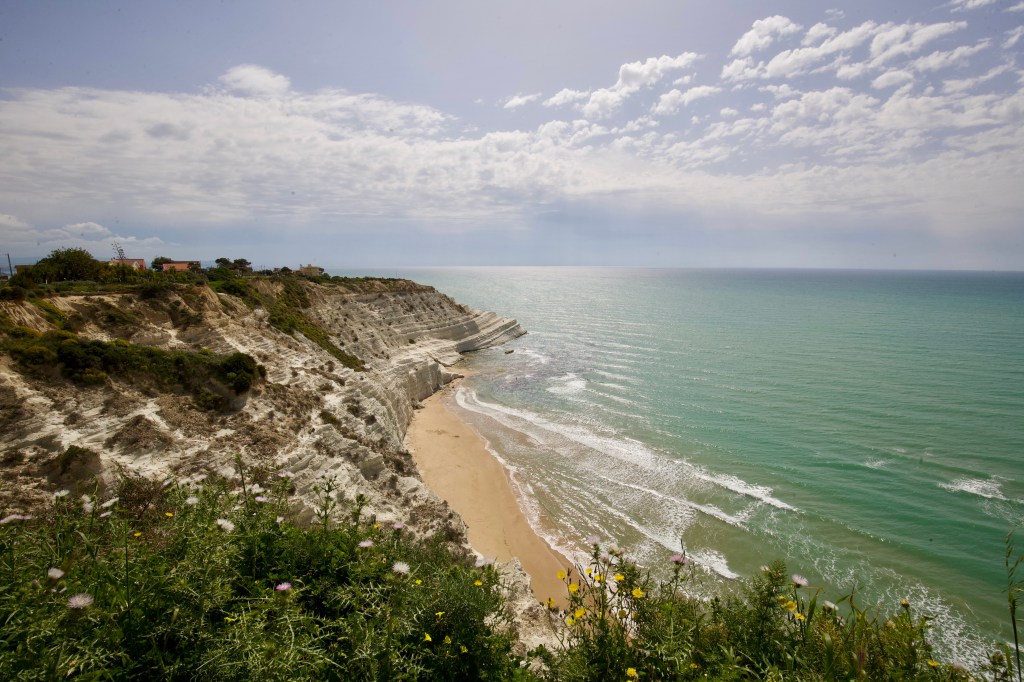
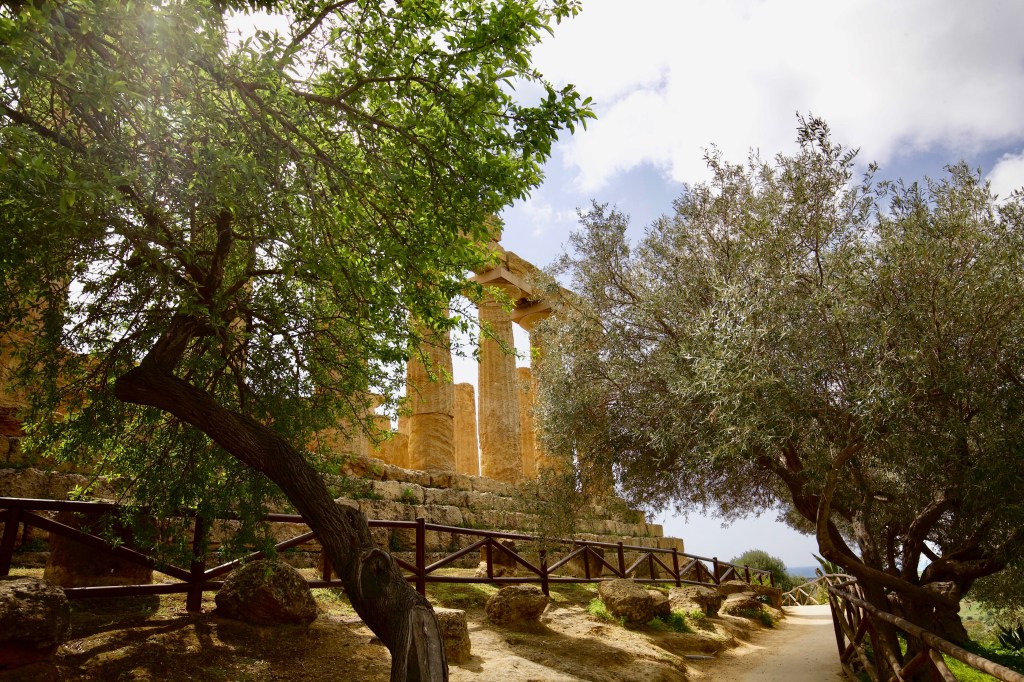
Agrigento is about a couple of hours by train from Palermo. It was known for the Valley of Temples and Turkish Steps. The former is a Greek ruin and the later a natural rock formation by the sea.
The Temple of Concordia is the star of the Valley of Temples. Most of the temples were sacked and struck down by monotheists because they were pagan. Some only had columns left, standing or lying on the ground. The Temple of Concordia was converted to a Christian church and thus survived. It is one of the big Greek temples still standing.
Turkish Steps is a taxi ride away from the Valley of Temples. It’s a cliff jutted out from the shoreline into the sea, but what sets it apart from other cliffs is its sheer white color standing out from the dark colors of the rocks around it. The white cliff also forms a dramatic contrast against the blue Mediterranean water.
Taormina
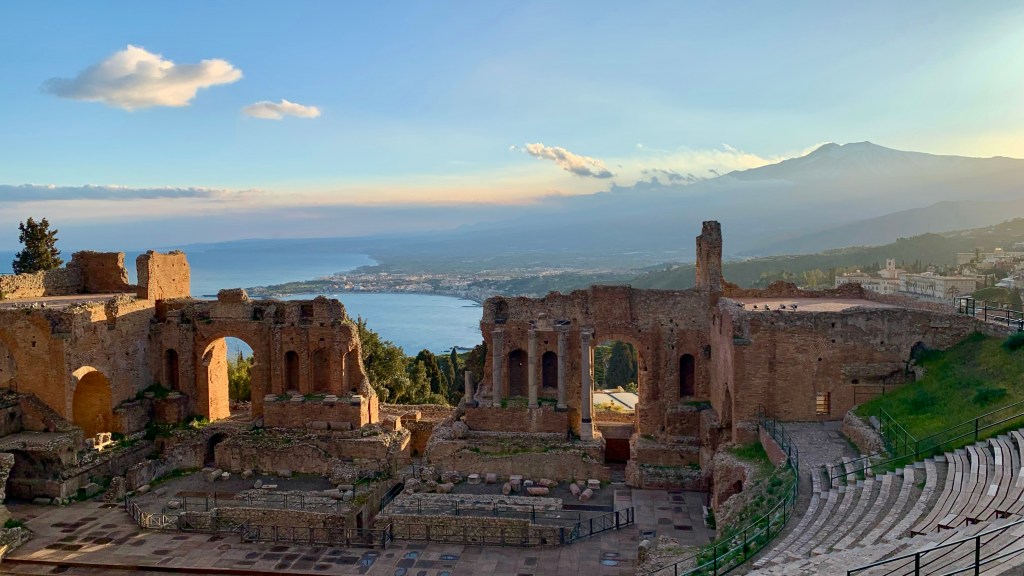
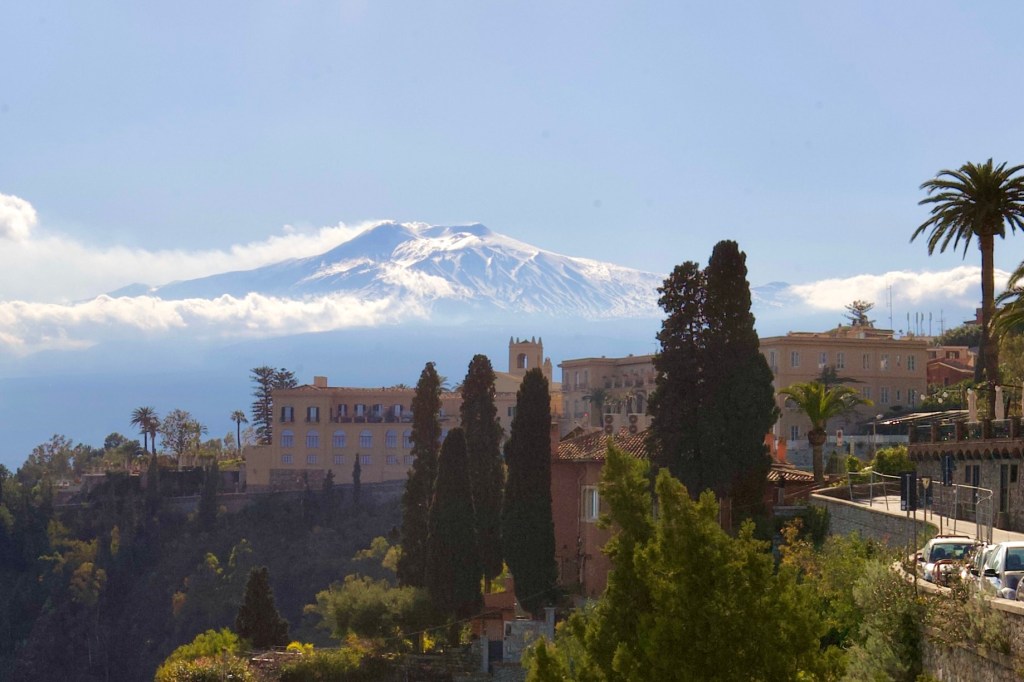
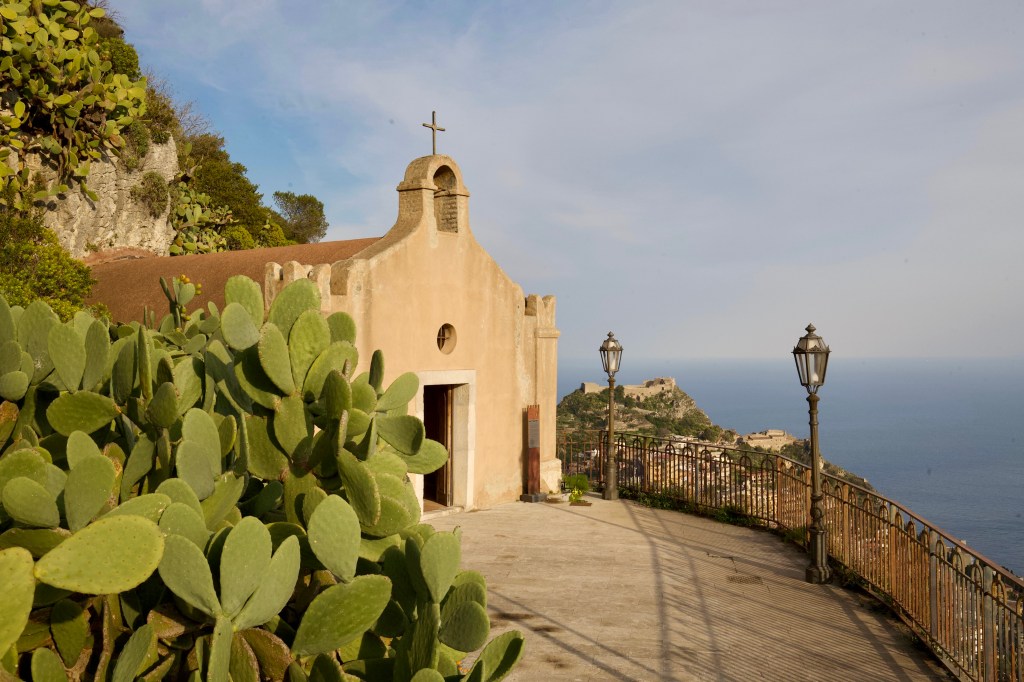
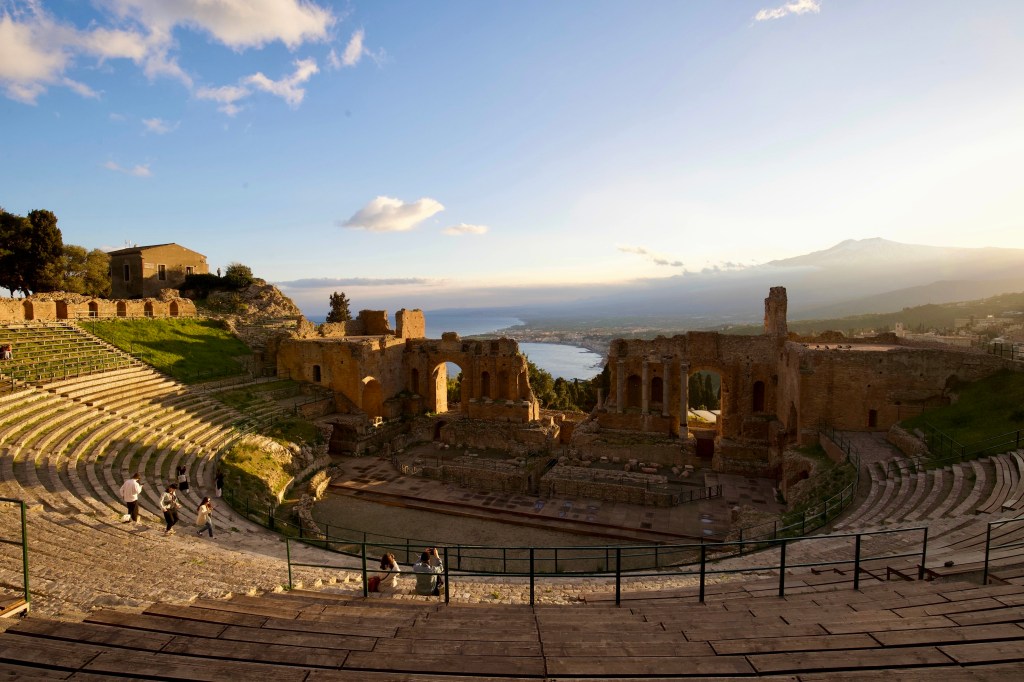
If you are looking for a resort city in Sicily, look no further than Taormina. It has beaches, trails, aerial trams, manicured gardens, tidy streets, flowery allies, historic ruins, and picturesque public squares. Taormina is a hill side town looking over the Mediterranean Sea. On the south side is Mt. Etna, the biggest volcano in Europe, and still active. The best place to appreciate this dramatic location is at the ancient Greco-Roman amphitheater perched on the highest point of the town. You can gaze at the blue Mediterranean Sea and snow capped Mt. Etna in the same frame. From the back side of the theatre, you can also look over a small island called Isola Bella at the foot of the city like a fairy land.
There are many moderate hiking trails close to the town. We hiked 3 trails, Isola Bella, Madonna della Rocca, and Castelmola (hiked myself). All the hikes are scenic and good workouts.
Syracuse
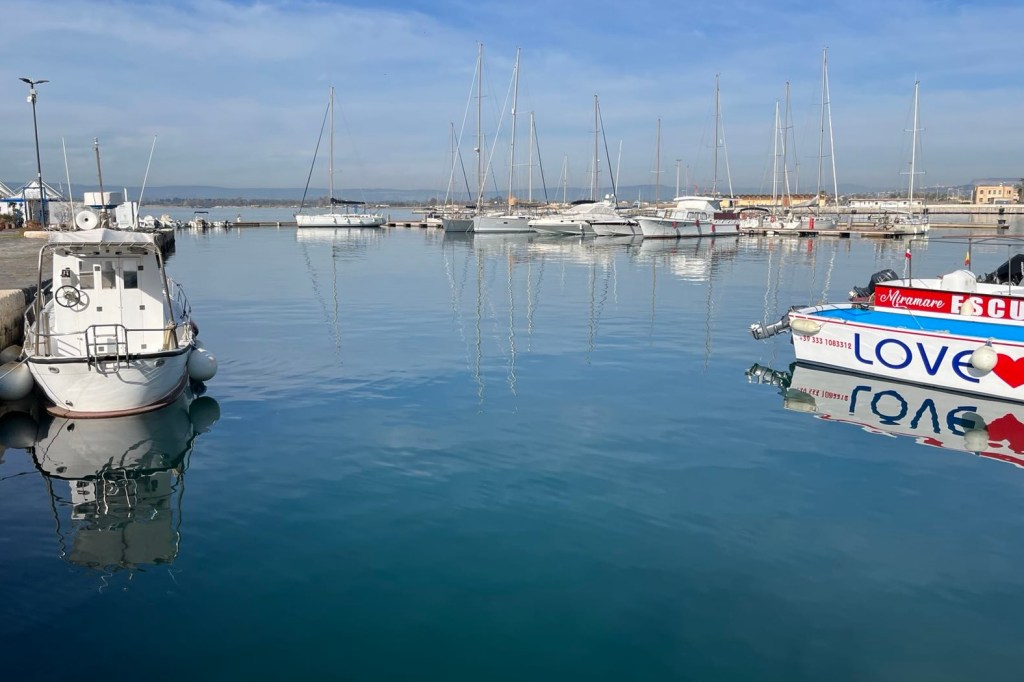
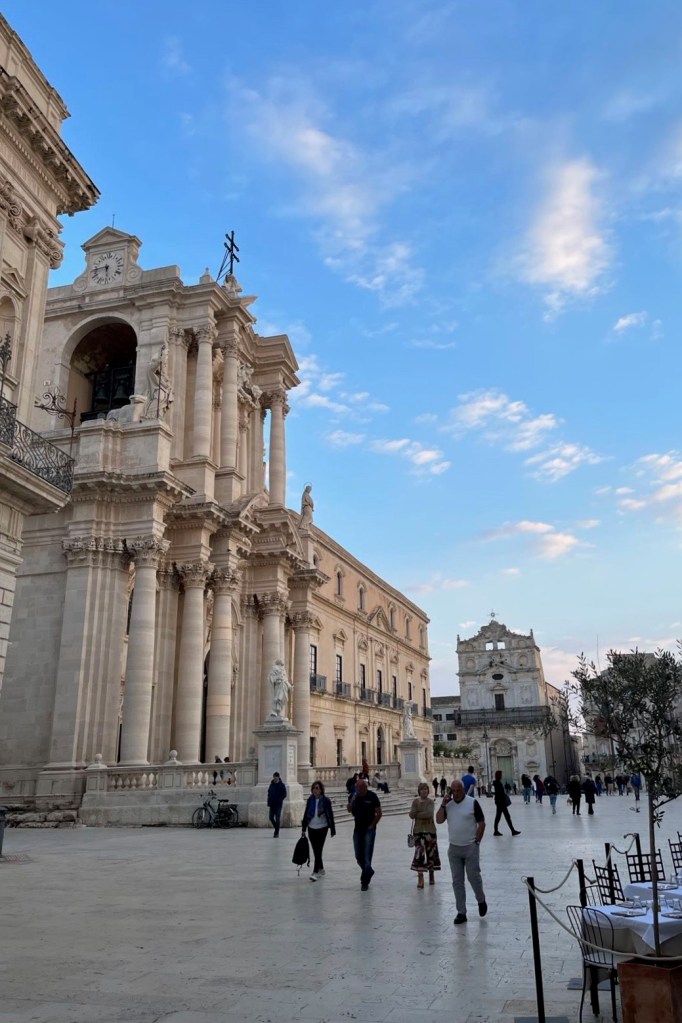
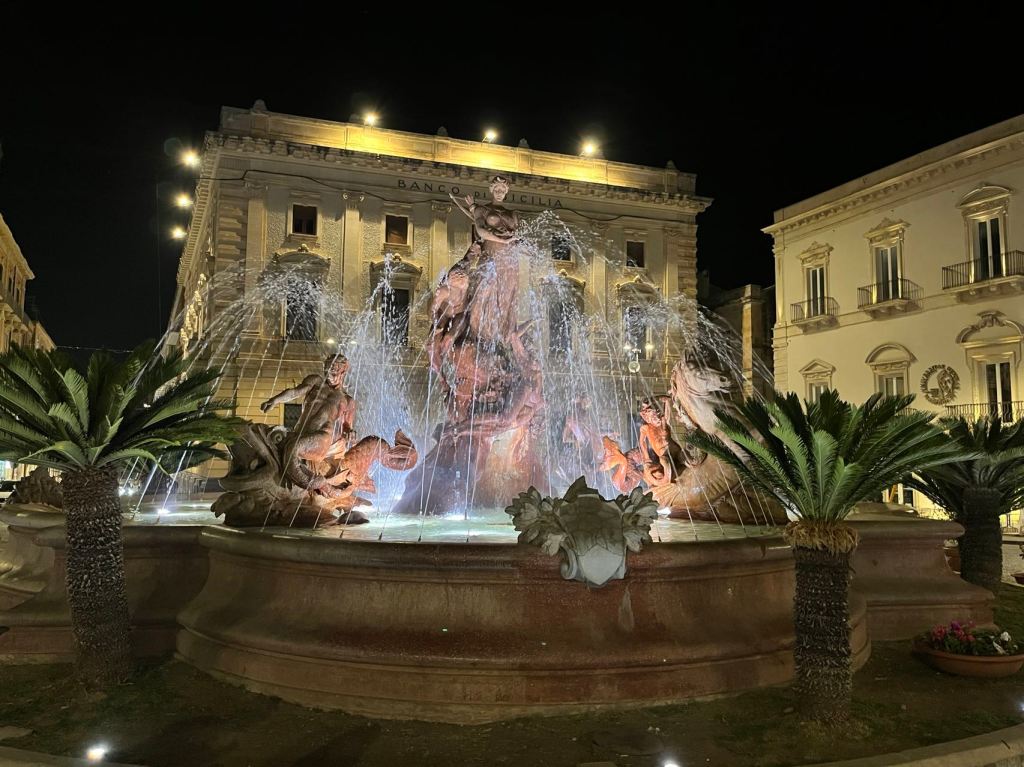
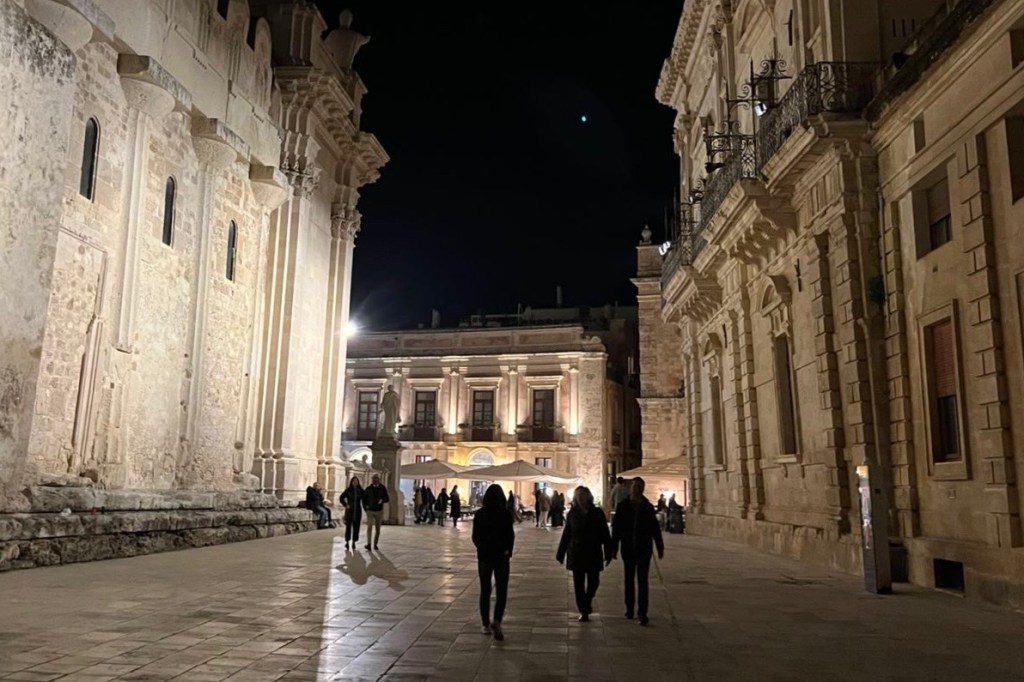
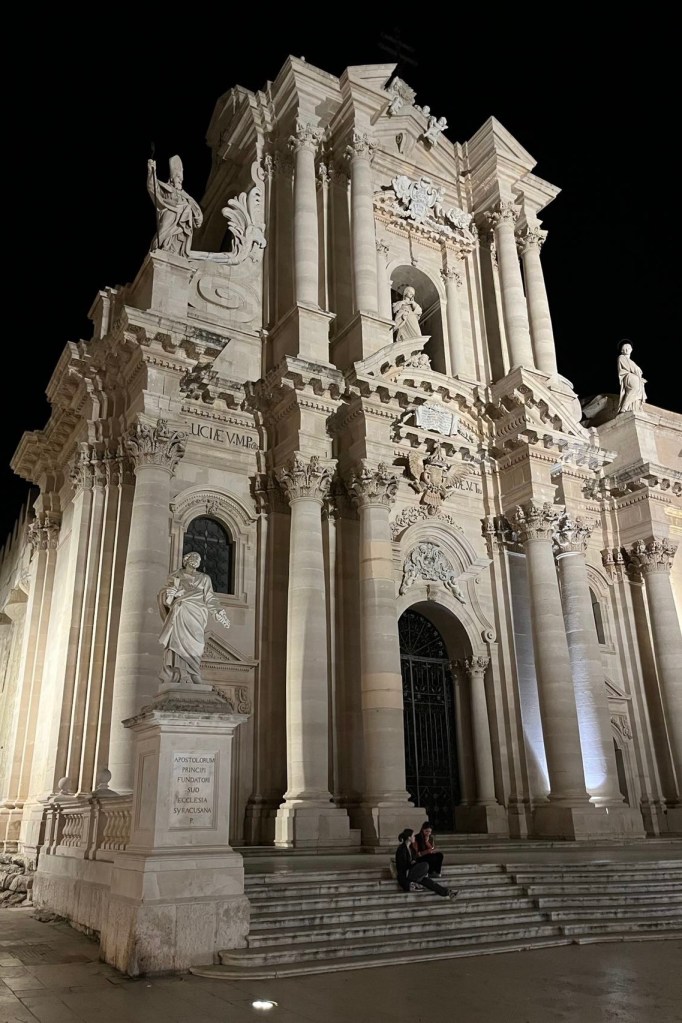
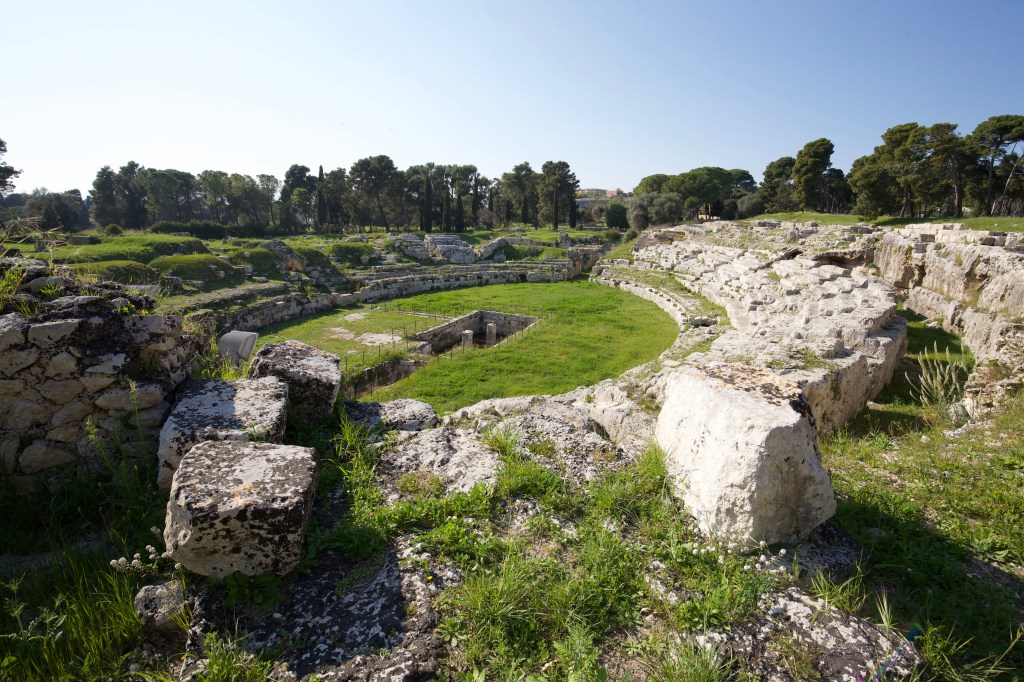
Syracuse was once the biggest city in the ancient Greek world. There is an Apollo Temple at the town center, now a ruin. There is also an ancient Greek amphitheatre and an ancient Roman arena in the north side of the city. A fortress, now a museum, is guarding the city at the southern tip. The town square in front of the basilica is most impressive. It was converted from a Greek temple. The Doric column colonnade was turned into the church wall but parts of the columns were still exposed. The Baroque facade of the basilica is one of the signature works of that era. The Baroque style Fountain of Diana in front of a downtown square is also representative of the flamboyant Baroque style. Take a stroll there after dark and you’ll be dazzled by the light and water show.
Noto
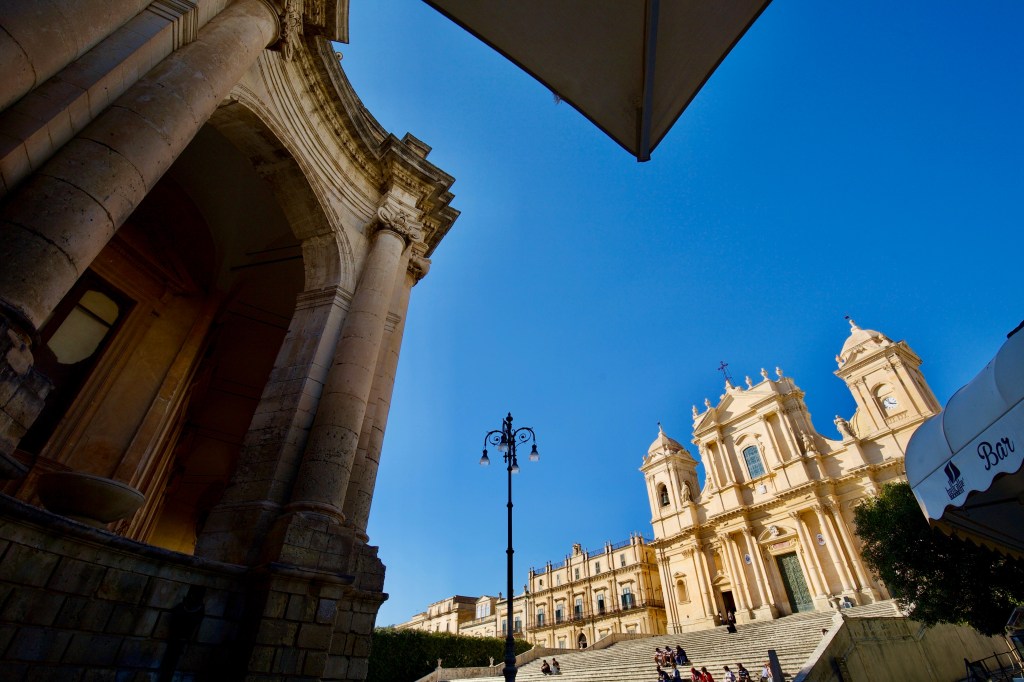
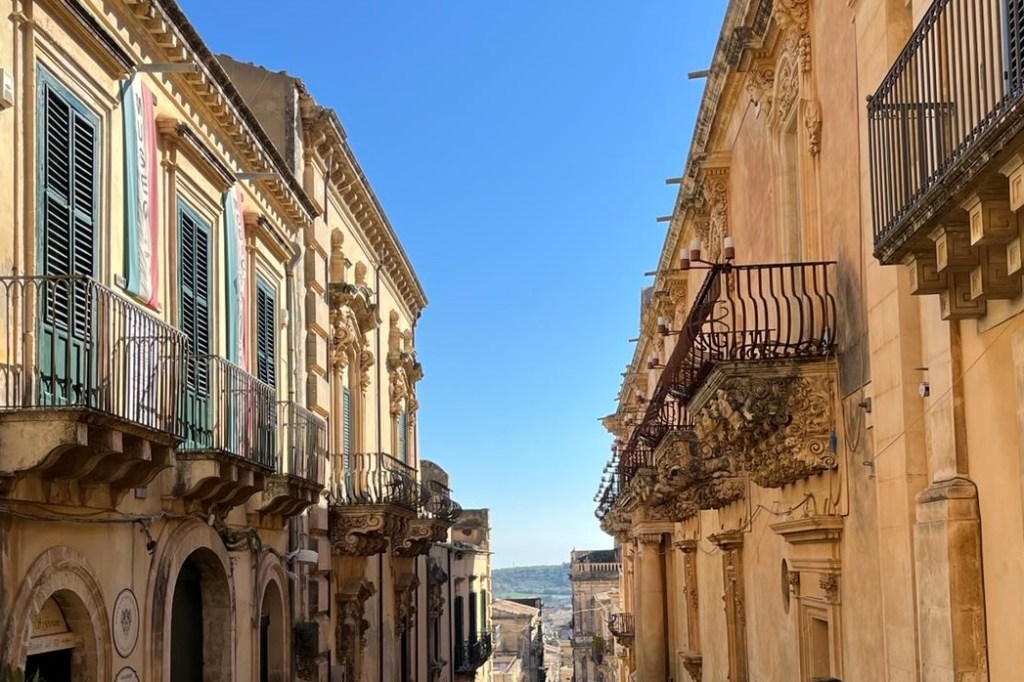
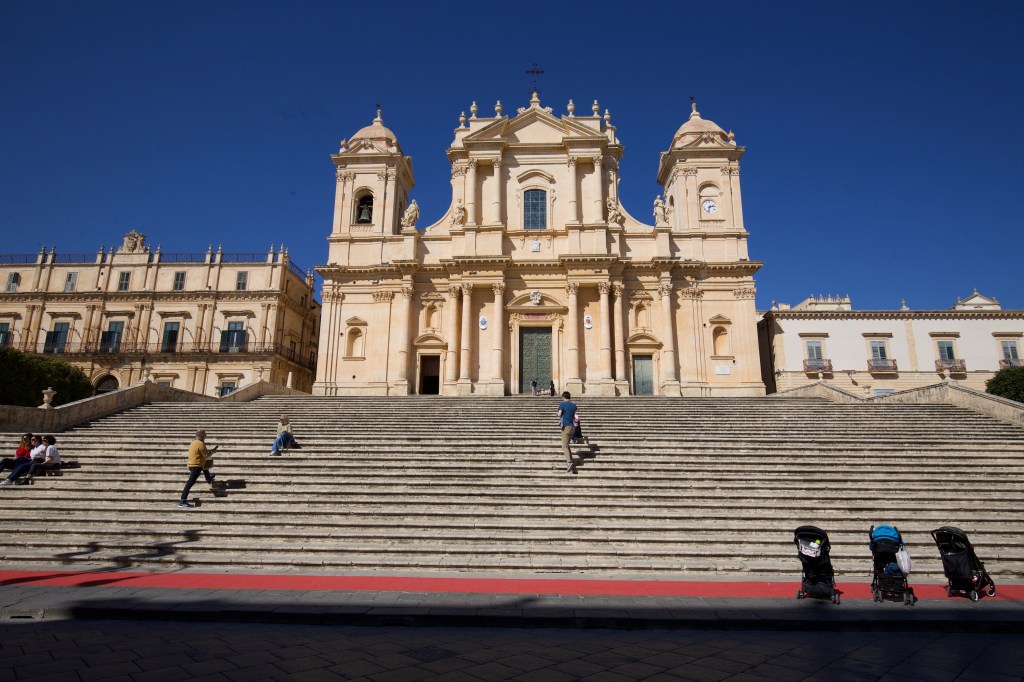
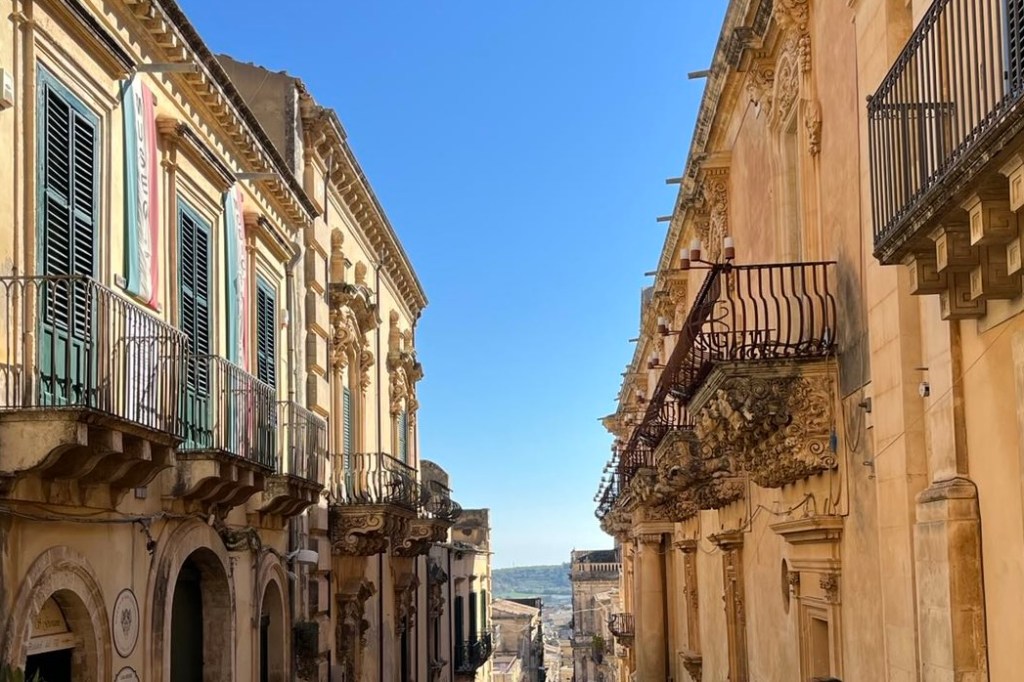
The small town of Noto is about an hour by train from Syracuse. This quaint town is overloaded with Baroque buildings that blew my mind away. The Noto Cathedral is one of the Baroque masterpieces. The best viewpoint to look at it is from the balcony of the city hall across the street, which itself is another Baroque work of art. We strolled in the quiet streets just a block or two away at the back of the cathedral. The details on some residential balconies made me wonder who once lived in the houses and commissioned the art work so extravagant.
AboutFood
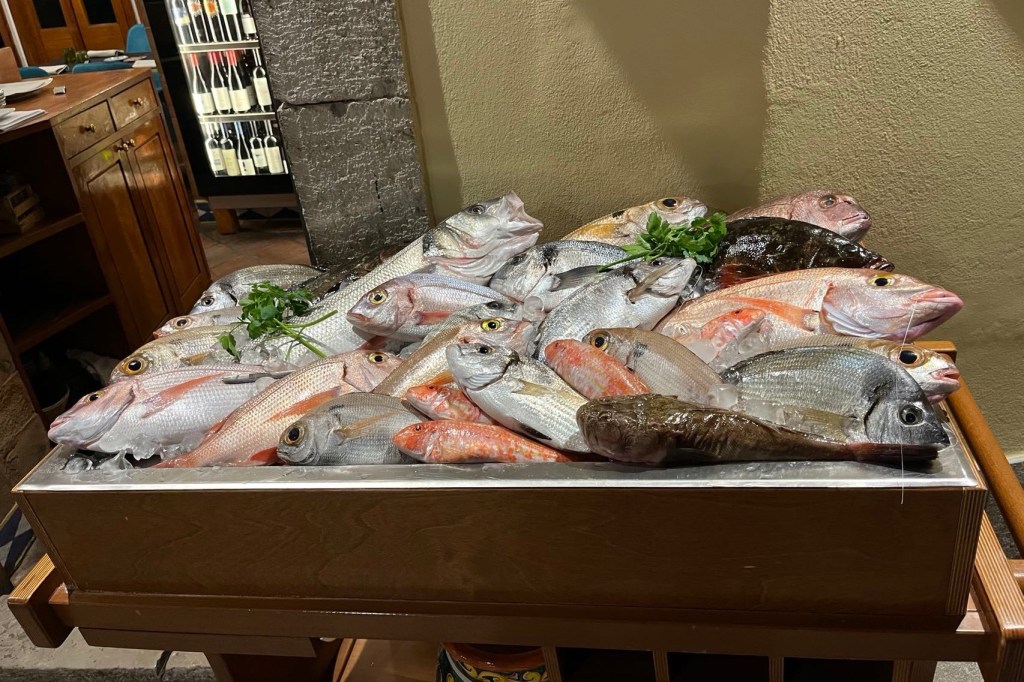
Sicily is the birthplace of cannoli, squid ink pasta, and eggplant pizza (the first two are also signature food of the North End in Boston, known for its Italian food). Eggplant pizza is the most delicious pizza I’ve ever eaten anywhere. Gelato and freshly pressed juice stands are commonplace. Sicily has an abundance for oranges, pistachios, and almonds. We bought oranges and almonds from the open air farmers market for snacks. They were local and wholesome, and most importantly, delicious. I found their open air markets most interesting, especially fish stands. The variety of fish there was just eye-opening. The chance is that you’d see fish that you’ve never seen before.
About Architecture
What impressed me most was how widespread the elaborately decorated Baroque buildings were in Sicily. Baroque style is famous for its glorious ornamentation, curves, swirls, circles and symmetries. The style just screams “look, I’m fabulous”. Yet I could see buildings in this style virtually everywhere in the cities, as if such extravagance cost nothing. There must be no shortage of wealth and craftsmanship there.
Final Thoughts
The Mafia could have been a product of power vacuums created by land grabbing between the big colonizers, and was a thing of the past (well, if you don’t count modern-day closed circles that assert underhanded influences in many areas like my son’s basketball travel team-one of my fellow parents called it mafia). I saw far more Archimides and his famous Pi souvenirs. We had many walks on quiet back streets after dark in Sicily and we didn’t feel unsafe for a second. Nowadays Sicily is experiencing a renaissance of tourism drawn by its unique flavor of history, culture, and of course, food. We were delighted that we participated in its renaissance celebration and had a taste of its many flavors.
Lessons Learned
When I thought of a train, multiple cars linked one to another with a locomotive somewhere in the chain came to mind. We bought the train tickets from Syracuse to Noto and were waiting for the train on the platform. Trains came and went by the platform. But by the scheduled time for our departure there was no train showing up bounding Noto’s direction. I was in panic. Several platforms away there was a single car parked on a side track like an orphaned on an abandoned track. I ran to the car with desperation. It turned out to be the Noto-bound train that I had been looking for all that time! We jumped on the car seconds before it chugged away, phew!! Stereotype (in this case, my notion of what constituted a train) made a fool of me and almost ruined a good day of vacation.
The following are some thoughts prompted by this visit to Sicily, which could be severely uninitiated and flawed. So skip it if it isn’t of interest to you.
Geo-determinism?
Human civilizations seemed to emerge along river banks-Tigris and Euphrates rivers, Nile River, Indus and Genges rivers, Yellow and Yangzi rivers…, if you believe agriculture is a catalyst of civilization. Civilizations then or concurrently also started around the Mediterranean Sea-Carthage, Assyria, Troy, Greek, and Rome…, if you believe trade is an engine for civilization. Geography played a pivotal role in shaping human history in either case.
Sometimes geography could mean inevitability. Sicily is a prime example. It is the biggest island in the middle of the Mediterranean Sea, off the toe of Italy, midway between two big continents, Europe and Africa. This strategic location sparked off numerous wars and resulted in frequent colonization power rotations. First, Carthaginians from south; then, Greeks and Romans from east; then Arabs from south; then Normans from north; then Spanish from west.
In the 11th century BCE, Carthaginians from North Africa colonized parts of the island. Other parts of Sicily were then colonized by the Greeks in the 8th century BCE. These parts were also called the Magna Graecia (Greater Greece). Then Romans came in the 3rd century BCE and drove out Greeks and Carthaginians. The great mathematician Archimides was killed by the Romans while he was defending his home town Syracuse, one of the biggest Greek cities at that time. Centuries later Arabs from North Africa came and drove out Romans. Normans from the North drove the Arabs out 200 years later. The Spanish then ruled Sicily before it became part of the unified Italy. Sicily is now an autonomous region of Italy.
Many great cultures paraded through Sicily. Carthaginian, Greek, and pagan Roman came to Sicily in turn. Sicily was converted to Christian when Rome established Christianity as its official religion (that Christian era of the Roman Empire was also known as Byzantine). Islamic prevailed when Arabs took over the island around 9th century AD. It went back to Christian world when the Normans drove out the Arabs about 200 years later. Spanish succeeded Norman a few centuries later. At the center of the capital city Palermo, the extraordinarily ornamented Four Corners, there are statues of four Spanish kings, one on each corner.
The rich cultural heritage was clearly demonstrated in Sicily’s architecture. Greek temples scattered the island. The renowned Valley of Temples in Agrigento“ is one of the largest Greek ruins in the world. It was hard not to notice Mosques-coverted churches in Palermo, with the unique onion-shaped Islamic domes and minaret-turned bell towers. Norman style churches are common among the basilicas in Palermo area, with arched portals with broad triangular facades, and symmetrical twin bell towers. Throughout the island, Baroque style buildings and fountains are ubiquitous, showing heavy Spanish and Italian influence.
Why I Blog
I could think of many lofty reasons to blog: to entertain my parents who are no longer able to travel, to share tips and pitfalls to avoid for friends who may plan to travel to the same places as I did, to organize our reservoirs of photos that have been accumulating forever… But my primary impetus for taking travel notes is a rather selfish one, to reflect on what I saw. In a sense, I’m reliving the moments while I’m writing these down. If others happen to find the notes to be useful, then the log has got a second life.
Turkey has been on my bucket list for a few years. It’s an end point of the ancient Silk Road, also a major layover stop for travelers flying between China and the U.S..
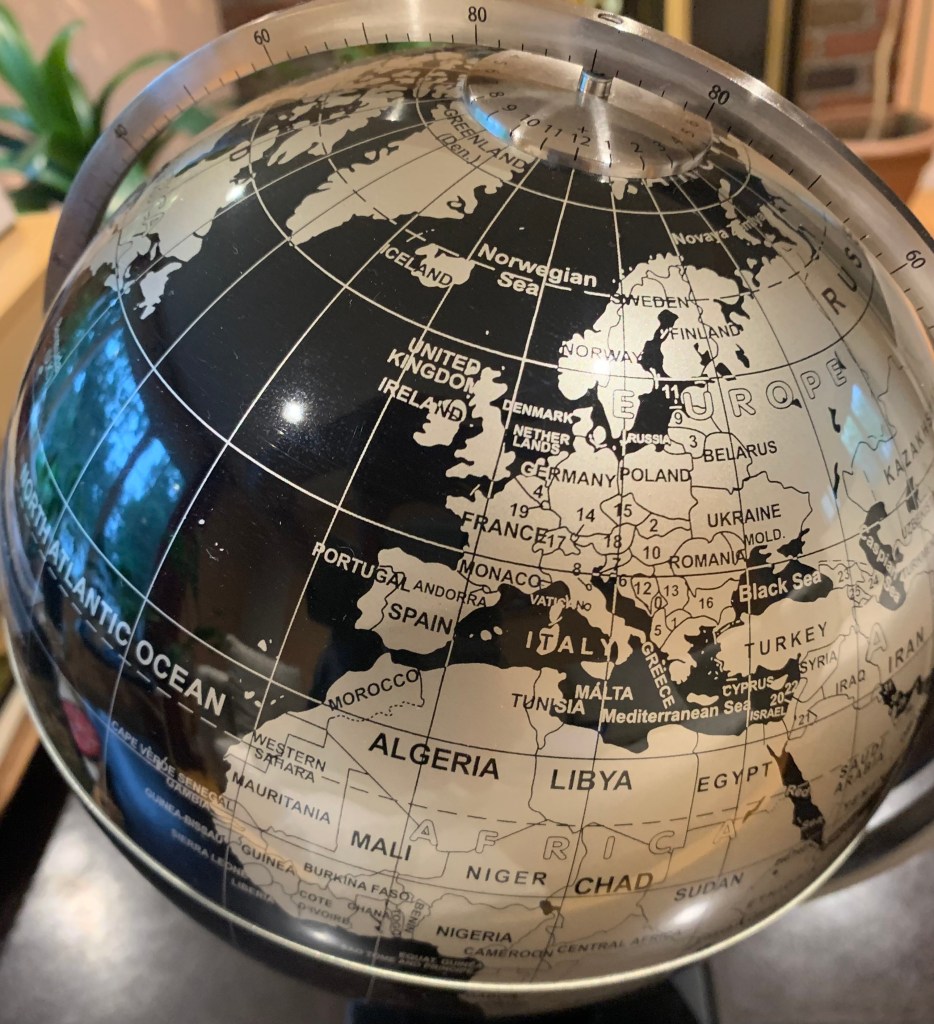
Can you find Turkey on the globe?
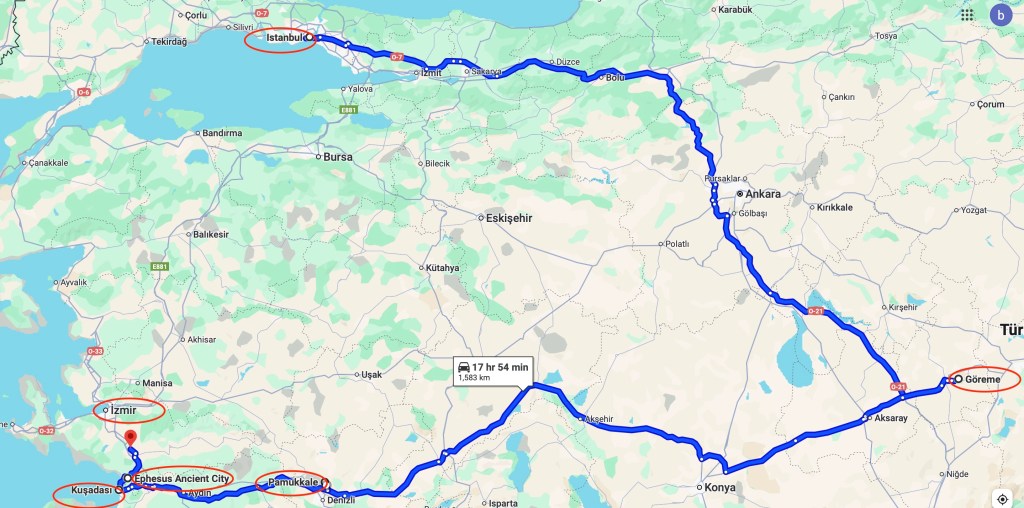
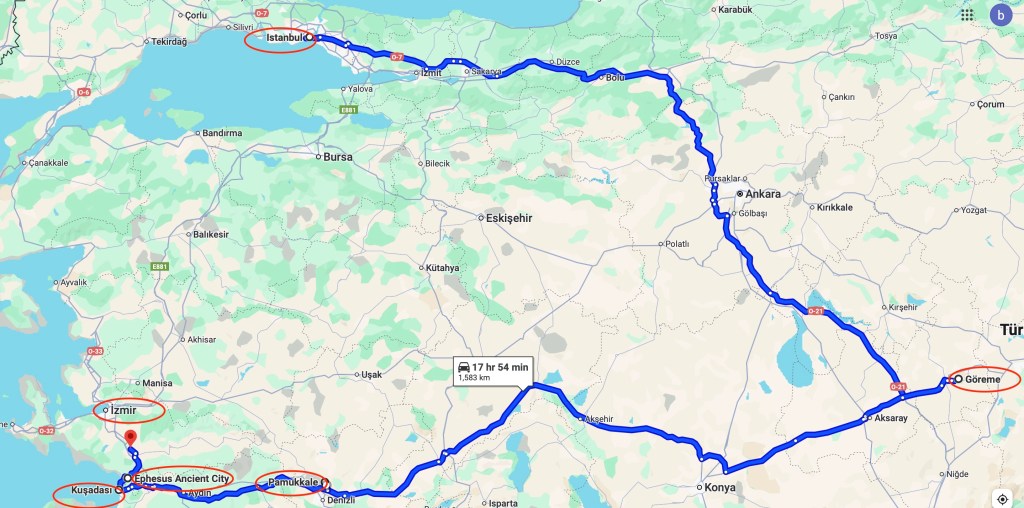
Our Turkey trip was about 9 full days, starting on 6/12 and ending on 6/23. We spent roughly 3 days each at the major stops – the biggest city Istanbul (hotel in Sultanahmet District), heartland of Cappadocia (hotel in Goreme Town), and the Aegean coastal region (2 nights each in Pamukkale Village and Kusadasi waterfront overlooking the marina on the Aegean Sea).
For our international flights, we chose an open-jaw route, eliminating redundant stops to minimize the travel time. We arrived in Istanbul and departed Turkey from Izmir Airport. For the domestic portion of the journey, we traveled by air and land. We flew from Istanbul to Cappadocia, then drove the rest of the way, to Pamukkale, then to Kusadasi, and finally to Izmir Airport. The transportation was smooth and uneventful-every traveler’s dream.
When we plan a trip, we always try to minimize time spent on transportation. At each stop in Turkey, we stayed at hotels right in the activity centers within walking distance to restaurants, entertainment, shopping, and attractions as much as possible. We accomplished the goal on this trip.
Geography, History, and Culture
Turkey is vast, geographically, historically, and culturally. One of the few countries in this world that spans 2 continents, Turkey straddles Asia and Europe. The area where Turkey is located is known as Asia Minor-Little Asia. It is a land jutting from Central Asia into the Black Sea to the North, the Marmara Sea and the Aegean Sea to the west, and the Mediterranean Sea to the south. The land covers an area about France and the UK combined. The trip from central Turkey Cappadocia to the western part of the country Pamukkale took us about 8 hours with 3 of us taking turns driving in excellent traffic and road conditions.
Its history is almost as old as human civilization. The oldest bread was found in Turkey, dated to some 12,000 years ago – so says Turkish Airlines, which serves bread inspired by it for an in-flight dinner. It’s the birthplace of yogurt – so claims a giftshop owner. I checked it online and he’s right. Many of their condiments are yogurt based. Most people link tulips to the Netherlands, but they may not know that tulips-Turkey’s national flower-spread to Europe from here.
Turkish culture goes with its geographic location – a fusion of western and eastern traditions. Since Persia (under Cyrus II) invaded the area in 500s BC, Turkey has been through a parade of political, religious, and cultural systems – Persian, Greek (Alexander era), Roman (the pagan era), Byzantine (Christian empire), Mongol, Ottoman (Islamic empire), and modern secular constitutional republic founded by Ataturk – meaning “father of Turks” in Turkish. This land has inspired some well-known myths like Helen of Troy and the Trojan Horse.
Today’s Turkey, although the political system is a constitutional democratic country, is a muslim society with mosques everywhere and calls for prayers filling the air every so often. The pristine highway system extends to everywhere we went, which is a large portion of the country. We didn’t hit a pot hole during our road trip. Except for the vastness of the land area covered, our road trip in Turkey was a breeze (we didn’t drive in Istanbul – traffic is bad there). It’s a modernized country with an unmistaken Islamic culture.
Landscape
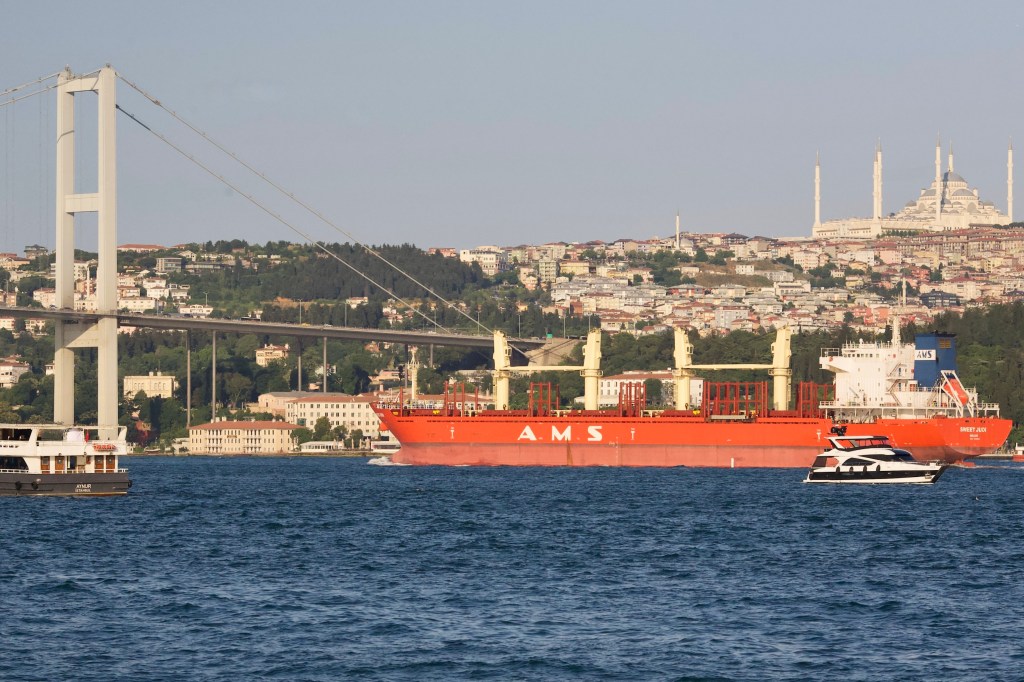
Turkey’s landscape is diverse. I was told that Istanbul has the most skyscrapers among European cities, yet I saw ancient sites scattered everywhere in the city – an Egyptian obelisk, a Roman aqueduct, a Byzantine underground cistern, Byzantine churches, and Ottoman style mosques and imperial palaces. Beautiful up-scale villas decorate lush green hills along Bosphorus Strait. Busy bazaars, restaurants, and marinas line the Golden Horn waterfront.
Mother nature’s work in Turkey is nothing short of wonderful. In Cappadocia, land covered with volcanic ash forms some of the most dramatic landscape man has ever seen. The volcanic ash turned into fairy tale mushroom shaped rocks after millions of years of erosion. Locals built shelters, storage, and churches in those rocks.
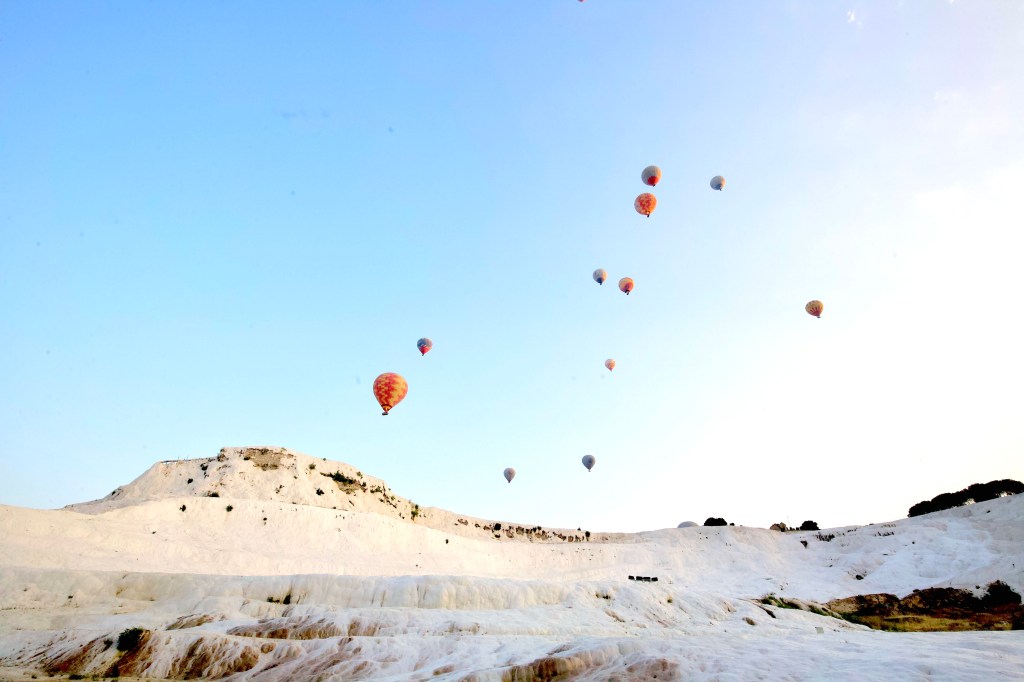
Dissolved calcium in the hot spring water solidified and deposited wherever the water flowed through and the deposits formed cotton-white travertine cascades in Pamukkale (cotton castle in Turkish). The travertine covers a mountain slope the size of many football fields that you can see from miles away.
This vast land area offers many varieties and contrasts. We saw quaint villages where sprawling wheat fields roll and grazing sheep roam. We also saw bustling cities where fancy yachts moor and luxury cruises come and go. Who doesn’t like this kind of dynamic?
People
It doesn’t hurt that almost everybody we encountered spoke some English (though most of the signs are in Turkish). That makes communication with the locals relatively easy. Also, I don’t recall that I’ve met a rude person there – yes, some street vendors can be pushy but I’ve seen more dramatic vendors in some other countries. A parking lot attendant recognized us when our car returned later that day. He waived our parking fee for the recurrence. A similar situation happened when we had difficulty getting Turkish lira from an ATM. The attendant let us park for free. Nice people.
This is the land that produced Helen of Troy, according to Greek mythology. Some of the local females’ faces resemble those of the classic Greek statues – small faces, large eyes, chiseled noses, and well-proportioned facial features. It could be that they are descendants of whom those statues were modeled from.
Istanbul
Aya Sofya is a must when you visit Istanbul. This modern-day mosque symbolizes the glories of two great empires, Byzantine (Eastern Roman) and Ottoman. It had been the biggest church in the whole Roman Empire and Christian world for centuries before the fall of Constantinople to the Ottomans under Sultan Ahmed in 1453 AD. The city name has been changed to Istanbul and the church has been converted to a mosque since then. The remnants of the famous Byzantine mosaic art work depicting Bible stories are still on the interior walls and dome ceilings of the building. The mosaic pieces on the dome ceiling in the line of sight of prayers from the praying floor are thinly veiled. The ground floor is not accessible by visitors. It is only open to muslim prayers.
There are too many other things to see and do in this big city.
Want to see ancient jewels and artifacts? Go to the Topkapi Palace, the imperial palace of the Ottoman Empire. You’ll see the biggest diamond in the world and the sword David used to fight with Goliath (so said the label) there. David is a prophet in Islam. You also get the best view of the Marmara Sea there.
Want to see tinted glass and experience the prayer floor of a mosque up-close-and-personal? Go to the Blue Mosque. Carrying your shoes around may save you some time going back to the shoe rack to retrieve your shoes when you exit the Mosque. I still didn’t get why it’s called the Blue Mosque while I saw more red than blue there.
Want to do some window shopping and people watching? Go to the Grand Bazaar and/or the Spice Bazaar. Grand Bazaar is said to be the world’s biggest bazaar. Spice Bazaar was an eye candy for me to see all sorts of exotic spices and their vibrant colors.
Want to get a panoramic view of the city? Go to the top of the Galata Tower. You will see boundless land and water from there: Marmara Sea, Golden Horn, and Bosphorus Strait dividing the city into Europe and Asian sides, and Europe side into Saltanahmed and Galata districts.
Want to cruise the Bosphorus Strait? Take a sunset cruise. There are an array of classes and types for the cruises, but they have one thing in common – the Bosphorus cruises do not go all the way to Black Sea. Nevertheless, it’s worth chilling out on a cruise after a day of city walking, soaking in what the land and water have to offer at the confluence of two continents and two seas.
Want relaxation after a day of sightseeing? Go to experience the famed hammam – Turkish bath. It may include a dry hot room, steam room, body rub, skin scrub, bubble bath, foot massage… In the intermission of the hammam, perhaps after a body rub, you may be sitting with a stranger or two across a coffee table, sipping Turkish tea, scantily dressed in a bath towel and bath shorts. But no worries, just relax.
Cappadocia
“Land of Beautiful Horses”. That is what the word “Cappadocia” means in Turkish. We do see a few horses there grazing grass once. However, I’d exchange “horses” with “balloons” because nowadays the region is known for one thing – hot air balloon rides at sunrise.
When we booked our hot air balloon tickets, most rides were already sold out. Unable to book the ride for the first morning we would be there, we booked a ride for the second morning, figuring we’d have the next morning as the backup. This decision proved to be crucial.
The first day in Cappadocia was a series of road trips to see the renowned natural landscape and man-made caves in it.
Underground City – layers upon layers of caves dug out of hardened lava ashes – were used as temporary shelters by the early Christians in the eara to hide from pagan persecutors. That was a time when you could get killed for being a Christian. There were also times when you could get killed for NOT being a Christian. Humans are strange beings.
There is an above ground version of the Underground City – Uchisar Castle. It is spacious and airy, carved in a colossal rock maybe 10 stories tall on the highest hill top in the area. It is a great spot to get a panoramic view of the Cappadocia landscape. There is a miniature stationary balloon at the foot of the castle. In case you can’t ride a balloon you can fake a balloon ride picture with yourself in the balloon and Uchisar Castle in the background.
There’s no better place to see the signature “fairy tale mushroom” rock formation than Devarant Valley, Pasabag, and Love Valley (which we only viewed from the balloon). Devarant Valley is a roadside attraction where you can hike the rock formations in the wilderness endlessly. There is no trail marking, no boundary, and no signs. You know you reached Devarant Valley when you see devilish rocks and chaotically parked cars on the roadside.
Pasabag is a gated park with trails. The rocks here have the best mushroom resemblance and most photo-worthiness, with black cone-shaped caps and white cylindrical stems, indeed a fairy tale land.
From the vantage point of the balloon, Love Valley looked like a huge heart-shaped bowl carved into the land. Some fairy tale mushroom rock columns shot into the sky from the bottom of the heart.
The next morning the alarm woke us up at the wee hour of 3. A van picked us up at 3:30. The staging area is a nice cafeteria with a breakfast buffet. We were bused to the balloon takeoff ground, waited and waited. Then the announcement came: all missions aborted. I can’t remember how long ago since I saw the sunrise, but I saw the sunrise on my trip back to the hotel that day- I was not an early morning person.
After we got back to the hotel, we called the balloon tour operator to see if there were openings for the next day’s ride. A few hours later we got the OK . We were lucky!
Some are not so lucky. A nice young couple who came from half a world away from South Africa had a flight to Istanbul to catch in the afternoon. Pretty sad to see their disappointment. It was the last day of their Cappadocia stay for an older Japanese couple who are world travelers. They had taken a balloon ride previously on an African savanah.
A Spanish teacher from Seattle was on his 18th(?) week of vacation traveling much of the world with his wife. He was going solo to the balloon ride because his wife feared height. My wife is acrophobic too. However, she decided that day was the day for her to overcome the fear (spoiler alert – she did it the next day with great composure)!
We had 2 back-to-back rude awakenings at 3 AM. The second time we actually flew! Standing in the balloon basket felt like being on a slow-moving UFO hovering the earth at a low altitude. There was no mechanical noise, no exhaust, just an occasional puff of fire or two into the balloon, at which moment all riders’ faces shimmered with a golden glow and you felt the warmth from the fire a few feets from above – a surreal feeling. The sun rose from the horizon after we soared to the optimal altitude. The sky became a symphony of light – the sun light and fire puffs from a hundred (115 as the pilot said?) hovering balloons in the sky.
After an hour of drifting with the wind, our balloon landed squarely on the landing pad – a trailer the size of the footprint of the 16-person balloon basket, about the size of a couple of ping-pong tables – hats off to the pilot. A hot air balloon has no power at all, just hot air to control the ascending and descending of the balloon. Lighting the fire, the balloon rises. When hot air cools down, the balloon sinks. Opening the little parachute at the top, the balloon collapses. All these controls are done with levers and ropes. The pilot and passengers are at the mercy of the wind to take them wherever the wind blows to. At the end of the ride, a requisite champagne celebration ensued to cheer for this truly special experience.
During the flight, the pilot asked if everybody was excited. Of course everyone was, because it was our first time to do this. The pilot said he was excited too because it was his first time. The air froze. Then he said it was his first time flying in this combination of conditions: temperature, wind speed, wind direction, air pressure, visibility… True – one cannot step into the same river twice. Seize the moment.
Pamukkale
What does Turkey invoke in people’s minds? I grew up in a time pre-hot air balloon tourism and the image I associated with Turkey was Cotton Castle – Pamukkale in Turkish. It is one of the most photographed objects in Turkey – white travertine terraces interleave, hot spring water flows over the terraces forming shallow turquoise pools. The ancient Romans loved to bathe and believed the hot spring had healing properties. They built the city Hierapolis next to the travertine pools. Legend has it that Cleopatra bathed there. She was the Queen of Egypt, wife of Caesar, after his assasination, wife of Mark Anothony (Consul of Rome). Cleopetra’s Pool is one of the biggest attractions here.
Before I went there, I had this fantasy of soaking in the pool, under the shades of palm trees, above the ancient Roman marble columns now collapsed under the hot spring water, pondering the rise and fall of two grand empires and three great rulers.
The hotel manager told me that Cleopetra’s Pool was closed indefinitely for reasons unknown. What he didn’t tell – and I didn’t ask – is that the travertine pools are 99% dry. I was able to take some pictures of the remaining few puddles. But you would feel cheated if you go there based on the pictures. There are a few man-made ankle-deep wading pools on the travertine slopes for tourists to dip their toes in, but one has to navigate through the crowd to get to the few square feet of water that belongs to you. We’ve ruined the ruin.
Ephesus
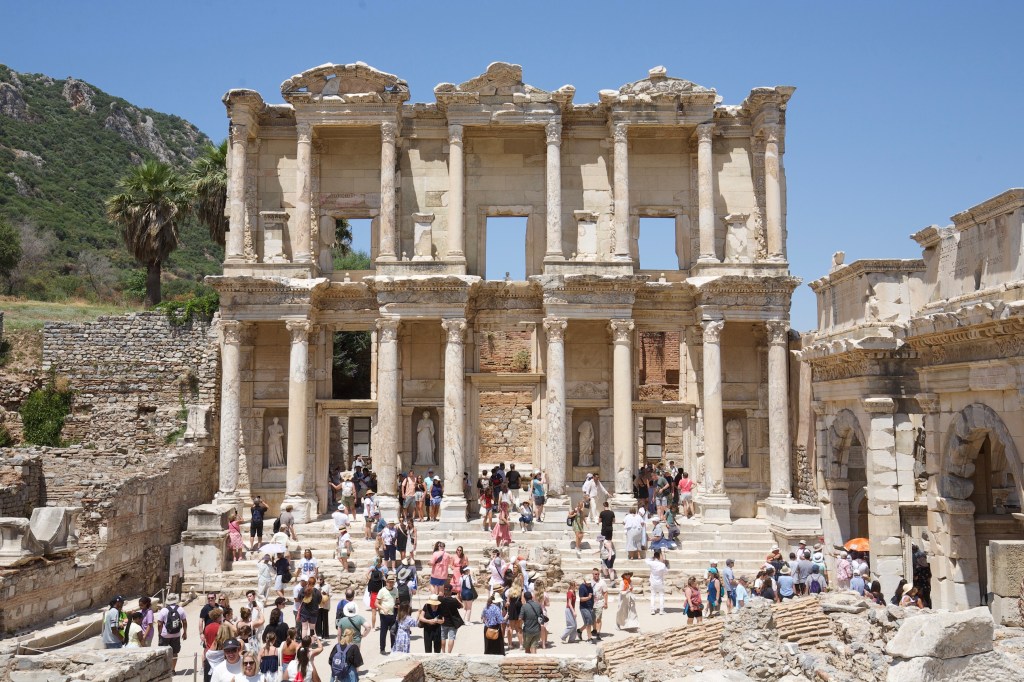
Among the Greco-Roman ruins that I’ve been to, Ephesus is one of the grandest and most well preserved. It was one of the biggest port cities in the Roman Empire before the port dried up. There is no trace of water today.
The center of the ruin is the Library of Celsus. Its 2-story facade is still standing proudly. The greatness of Ephesus and Rome at its prime is palpable from this facade. Proportions between the doors and columns just feel perfect. Variations between the pediments and capitals just look right. The relationships and dynamics between the different components (doors, columns, pediments, and statues) are strokes of genius.
Ephesus concluded our Turkey journey. I felt that I had a good glance at this vast country (in both space and time).
Lessons learned
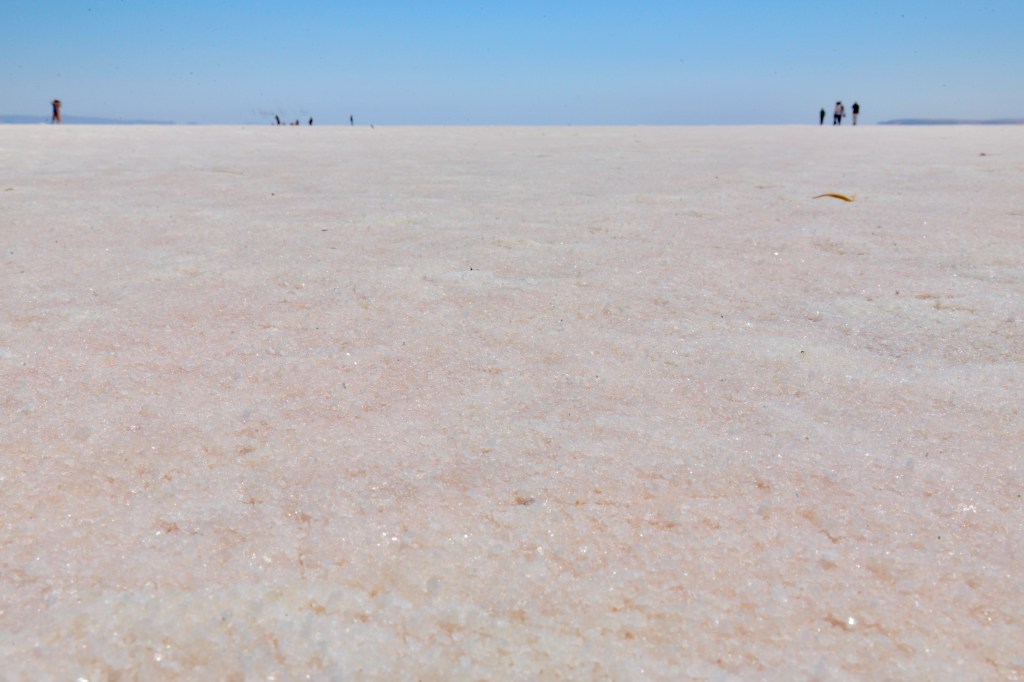
I could have done my homework. We solicited the hotel’s suggestion to fill the void left by our aborted balloon trip that morning. When the hotel owner showed us his video clips of Tuz Golu – meaning “salt lake” in Turkish, I got carried away immediately. The place looked like a wonderland – ankle-deep crystal clear water, reflecting like a mirror, flat like a glass pane, endless like an ocean, and just otherworldly with a mysterious pink-ish hue. Why wait? We embarked on our journey to Tuz Golu.
Two-and-half hours of driving later, we saw a bright white-pink-ish strip on the horizon like a mirage – the salt lake! But that was the highest point of the day. When we got there, we found not a drop of water. The lake is enormous. We walked 300 feet into the lake bed. It was bone dry, nothing but salt. The next 10 miles, 20 miles, would be the exact same. I pulled out my phone and started to search for Tuz Golu. The lake has been dry for a few years, the internet says.
Skipping homework is never a good idea – I learned after a dear tuition paid and one vacation day wasted.
Why I travel
An old Chinese saying goes “travel thousands of miles; read thousands of books”. Travel writer and TV host Rick Steves says, and I paraphrase, we travel to gain perspectives of the world. I agree with both – means (travel) to an end (world perspective).
For me, gaining perspective of the world comes as a side effect from my travels. I travel because I want to transport myself to a different world that I fancy. That could be a learning experience, an exotic place, an ancient ruin, a natural phenomenon, a trek, or another planet-like. I treasure every experience interacting with a person out of my usual circle-a hotel staff (who shared his family video with us), a souvenir shop owner (with whom we had a conversation about tulip patterns on the ceramics, origin of yogurt, and the meaning of ubiquitous evil eyes; he ended up giving us an evil eye charm as a gift), a restaurant server (who shared his son’s wedding photo and the couple’s whereabout, and gave us a small parting gift), or a hammam attendant (who told us where she was from). I feel mentally renewed and spiritually enriched after traveling.
Travel can be physically and mentally demanding. You exchange “good” pressure (if there is such a thing) of doing something you really want to do, with “bad” pressure of mundane daily life. Researching, planning, booking, documenting, communicating, coordinating for travel are just some things that take energy and time. But you know you’re working towards a specific, concrete goal you set for yourself.
During a trip, you and your travel companions are one unit aiming at the same goal – to check off the activities you come up with together, documented in your itinerary. For days, you are forced to sleep, eat, walk, and ride together, facing unknowns and solving problems thrown at you by the circumstances. Traveling exposes one’s personality like nothing else – weaknesses more so than strengths. If you love someone, take her or him to travel. If you still like the person at the end of the trip, you are lucky.
When I reflect on the life I’ve lived, I think of my loved ones and those sparkling moments – the travels I’ve done – often with loved ones. If I’m not traveling, I’m planning for a trip – that is my motto.
Travel is good for your body and soul, and is good for mankind. Many problems and biases are rooted from lack of understanding of this world we all live in. I hope more and more people travel, reach out to those people and things that are different from ours, which could help calibrate our own.

















 From the vantage point of the balloon, Love Valley looked like a huge heart-shaped bowl carved into the land. Some fairy tale mushroom rock columns shot into the sky from the bottom of the heart.


 A Passer-by 过客